Why Choose a 5 Star Umrah Package for Your Sacred Journey?
August 13, 2026 No Comments
Umrah is a journey of worship, reflection and spiritual renewal. Yet travel arrangements can affect…

Home / Halq or Taqsir: What Should You Do After Umrah?
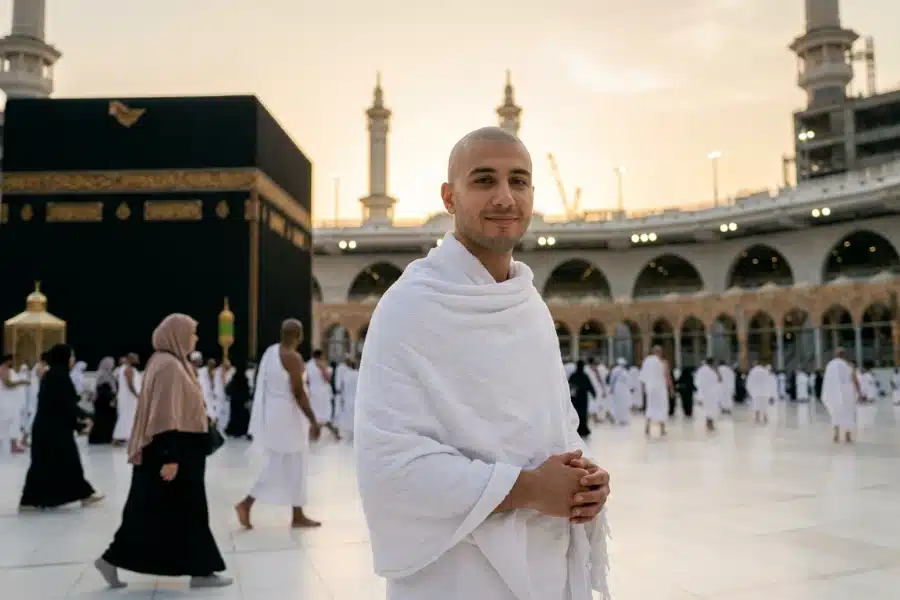
You’ve made Tawaf around the Kaaba. You’ve walked between Safa and Marwah. Your heart is full, your feet are sore, and then someone hands you a pair of scissors and you freeze. Now what? Almost every pilgrim asks this, and it’s where first-timers get quietly stuck. Knowing what to do after Umrah, specifically the choice between Halq or Taqsir, is what turns your worship from “almost done” into “complete.”
What is Halq or Taqsir: After you finish Sa’i, you cut your hair to complete Umrah. Men perform Halq (shaving the whole head) or Taqsir (trimming it), while women perform Taqsir only, cutting about 1–2 cm from the ends. This haircut is the final step of Umrah, and the moment it’s done, the state of Ihram ends.
The haircut is the last rite of Umrah, performed right after Sa’i. By the time you finish Sa’i, you’ve already done most of the work. The usual order looks like this: you enter Ihram, perform Tawaf, pray two rak’ahs near Maqam Ibrahim if you can reach it, drink Zamzam, and complete Sa’i between Safa and Marwah. Then comes the part people forget to plan for. You cut your hair.
In short: until you’ve done Halq or Taqsir, you’re still in the state of Ihram, restrictions and all. That’s why understanding the Umrah hair cutting rules matters as much as knowing how to make Tawaf.
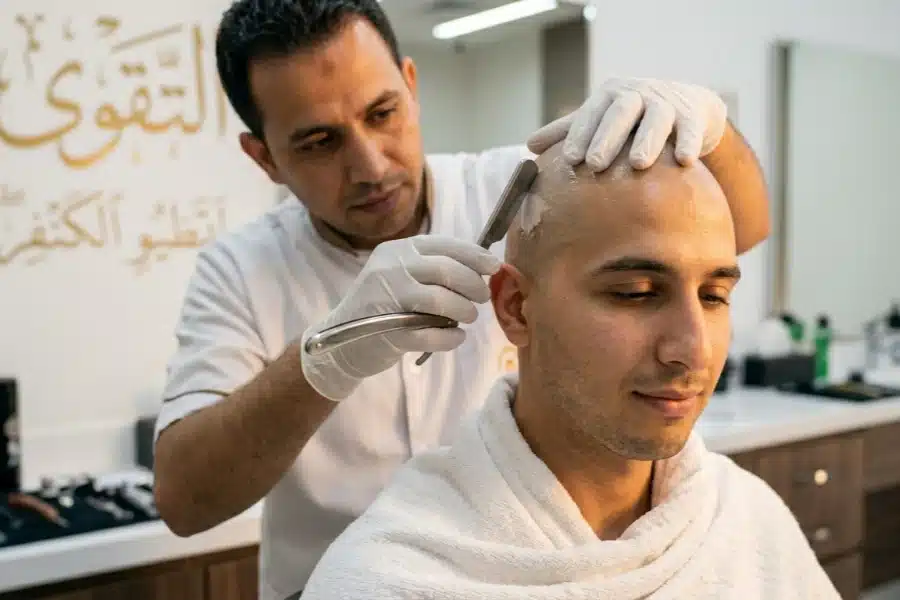
Halq means shaving the entire head, and it applies to men only. Not a trim, not a tidy-up around the edges, the whole head taken down to the skin.
Most scholars treat Halq as the more rewarding option for men. When the Prophet ﷺ made dua at the farewell pilgrimage, he asked Allah’s mercy for those who shaved their heads. The companions asked about those who only shortened their hair. He repeated the prayer for the shavers, and only after being asked again did he include those who trimmed (Sahih al-Bukhari).
Why it’s encouraged: shaving is an act of humility, a willingness to let go of appearance and pride in front of Allah.
Taqsir means shortening or trimming the hair rather than shaving it. It’s valid for men, and it’s the required method for women.
The key rule with Taqsir is that the trimming should cover the whole head, not just a snip from one side. A man who clips three hairs near his ear and calls it done hasn’t really fulfilled it. You take a small amount from all around the head. For women, the amount is modest: roughly a fingertip’s length, about 1 to 2 centimetres from the ends, as the official Nusuk guide notes.
Both options complete your Umrah; the difference is mainly the degree, and for men, the reward.
| Point | Halq | Taqsir |
|---|---|---|
| Meaning | Shaving the head | Trimming the hair |
| Who it’s for | Men only | Men and women |
| Amount | Entire head shaved | Hair shortened all over |
| Virtue | More rewarded for men | Valid and accepted |
| For women | Not permitted | The required method |
Men may choose either Halq (shaving) or Taqsir (trimming); shaving is the more rewarded option. You’ll notice many men leave the Haram with freshly shaved heads for exactly that reason.
That being said, Taqsir is completely valid. Some men keep their hair for work or personal reasons and trim instead, and there’s nothing wrong with that. Practical tip: if you plan to perform Umrah more than once on the same trip, trim on the earlier visits and save the full shave for the last one, so you’re not bald on day one. Whatever you choose, take from the whole head, not a token snip.
Women perform Taqsir only, trimming about a fingertip’s length (1–2 cm) from the ends. They never shave.
So, can women cut hair after Umrah? Yes, and they must. How much hair to cut after Umrah if you’re a woman? Gather your hair, or a section of it, and trim about 1 to 2 centimetres from the ends. That’s it. You don’t need a dramatic haircut, and you shouldn’t feel pressured to cut off length you want to keep. A small, deliberate trim from the ends fulfils the rite completely. Many women bring their own small scissors and do this discreetly, which is perfectly fine and often easier than hunting for a private corner.
The biggest mistake is treating Umrah as finished before the haircut, it isn’t. Watch for these:
When you’re unsure, ask a scholar or your group guide before you act. A thirty-second question saves a lot of second-guessing later.
Cutting the hair is named in the Qur’an as part of a fulfilled pilgrimage (Surah Al-Fath 48:27). Allah describes the believers entering the Sacred Mosque in safety, with heads shaved and hair shortened. The act is written into the very picture of completed worship.
There’s a spiritual logic to it too. Cutting your hair is a small surrender. You arrived with your routines, your appearance, your sense of how you like to look, and you set a piece of that aside in obedience. It marks a fresh start, a quiet line drawn between the person who entered Ihram and the one walking back out of it.
After guiding thousands of pilgrims through their Umrah journey, we’ll tell you straight: the haircut is the step people underestimate the most. Travelers spend weeks rehearsing Tawaf and Sa’i, then stand frozen after Sa’i because nobody clearly told them what comes next.
The most common slip we see? Pilgrims wandering off to find a barber while assuming their Umrah is already complete. It isn’t, until the hair is cut. That is why a well-planned Umrah package should not only cover flights, hotels, and transfers, but also guide pilgrims through the actual rituals with clarity.
So we brief every traveler beforehand: finish Sa’i, handle Halq or Taqsir straight after, then change out of your Ihram. For anyone booking Umrah packages or reading an Umrah guide for first-time pilgrims, that single reminder prevents more confusion than almost anything else.
Once the hair is cut, your Umrah is complete and the state of Ihram lifts. The restrictions fall away. You can wear normal clothes again, men can cover their heads, and perfume, grooming, and everyday comforts become permissible once more.
What doesn’t end is the spirit of the trip. You’re standing in one of the most blessed places on earth. Keep making dua, keep thanking Allah, and let the calm of a completed Umrah settle in before you rush anywhere.
No. Men can choose Halq or Taqsir. Halq (shaving) is more rewarded, but trimming is fully valid.
No. Women perform Taqsir only, trimming a small amount from the ends. Shaving is not for women.
About a fingertip’s length, roughly 1 to 2 centimetres from the ends. A small trim is enough.
Yes, as long as Sa’i is fully complete and you trim from the whole head. Plenty of pilgrims do.
No. The haircut is the final step of Umrah. Without it, you’re still in Ihram and the rite isn’t finished.
Cut first. Ihram restrictions only lift after Halq or Taqsir, so finish that step before normal grooming.
Knowing what to do after Umrah comes down to one calm, deliberate act: Halq or Taqsir. Men choose between shaving and trimming, women trim a small amount, and everyone walks away from Ihram renewed. The guidance here follows the official Nusuk pilgrimage instructions and the rulings drawn from the Qur’an and Sahih al-Bukhari, so you can act on it with confidence.
If you’re planning your journey and want every step mapped out before you go, that’s exactly what we do at Ihram Travel. We’d rather you spend your time in the Haram present and at peace than second-guessing a haircut.
Our curated content will ensure you’re well–prepared and inspired every step of the way.