Why Does Choosing the Right Umrah Travel Partner Matter?
October 14, 2025 No Comments
Performing Umrah is a deeply spiritual journey that brings countless Muslims closer to their faith.…

Home / Tawaf Duas for All 7 Rounds: What to Recite During Umrah
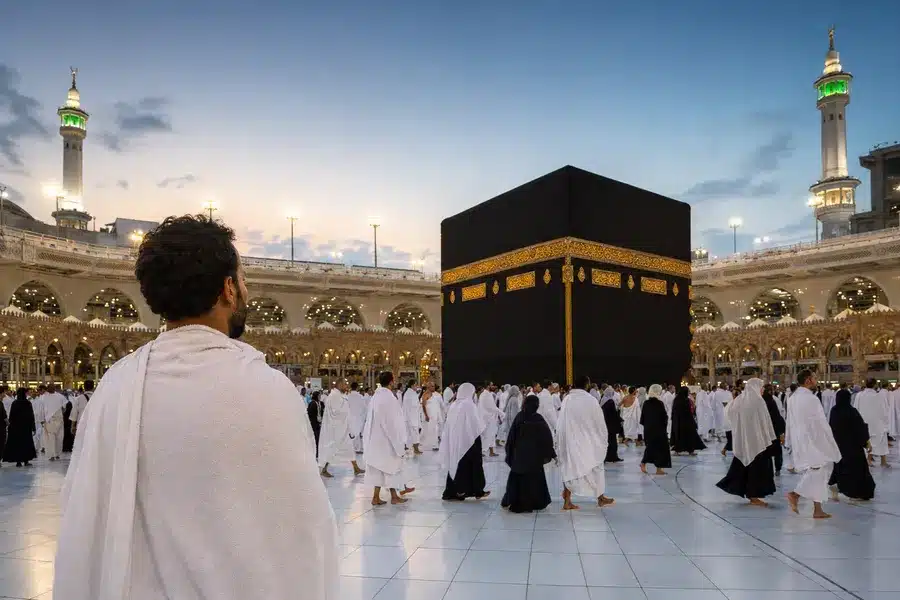
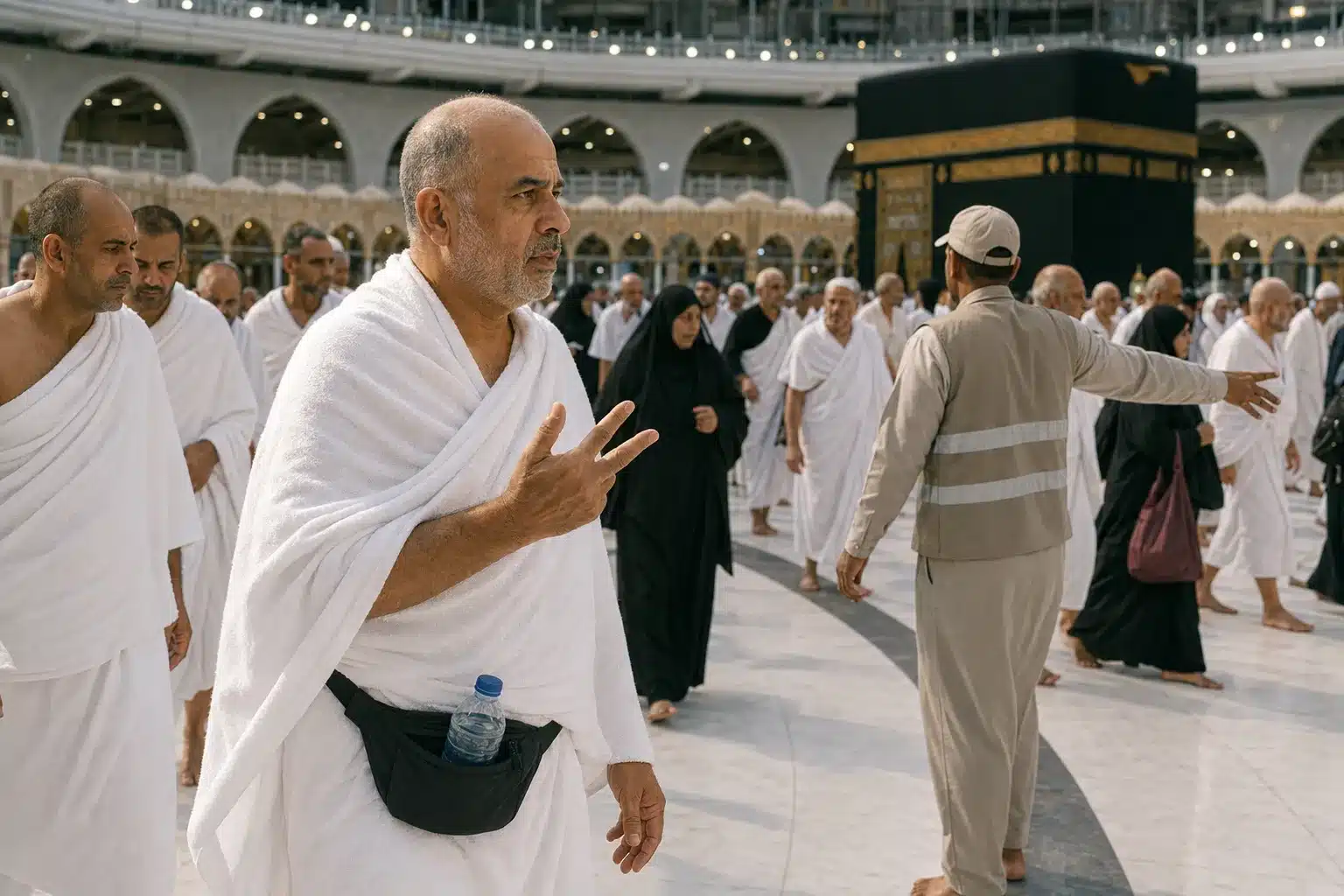
Tawaf is one of the most moving acts of worship performed during Umrah and Hajj. Walking around the Kaaba seven times gives a pilgrim an opportunity to remember Allah, seek forgiveness, express gratitude and make deeply personal prayers.
Many first-time pilgrims worry that they must memorise a different Arabic dua for every circuit. This can create unnecessary pressure before the journey. The essential point is simpler: there is no compulsory, separately assigned dua for each round of Tawaf. A pilgrim may make sincere dua, recite Qur’an, perform dhikr or remain quietly focused on Allah.
This guide explains what is established, what may be recited and how optional themes can help you remain spiritually present through all seven rounds.
No authentic evidence requires pilgrims to read seven fixed supplications in a particular order. Printed booklets sometimes label a special prayer for round one, another for round two and so on. These collections can be used as personal prompts, but they should not be treated as compulsory words or a prescribed Sunnah sequence.
During Tawaf, you may:
The value of dua does not depend on its length. A few words spoken with humility can be more meaningful than a long passage recited without understanding.
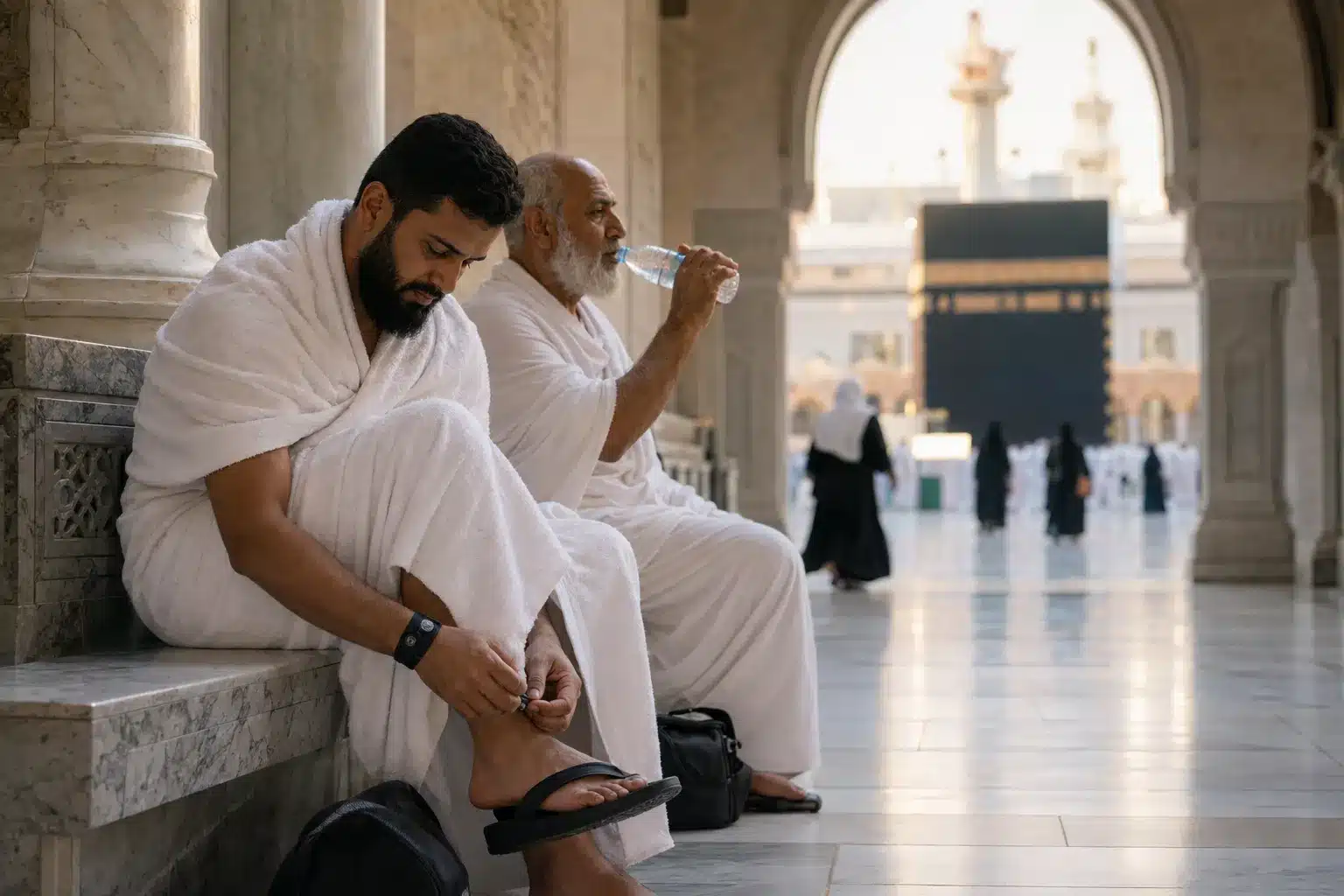
Tawaf starts in line with the Black Stone and proceeds anticlockwise, keeping the Kaaba on the left. Each return to the starting line completes one circuit.
Before beginning:
The intention does not require a fixed verbal formula. Knowing in your heart which Tawaf you are performing is sufficient. Pilgrims comparing Best 5 Star Umrah Packages UK should also check whether practical ritual guidance is included, especially if this will be their first visit.
When you reach the starting point in line with Hajar al-Aswad, begin your circuit. If you can approach the Black Stone safely, follow the appropriate guidance. If the area is crowded, do not push, block others or risk causing harm. You may face or gesture towards it and say:
بِسْمِ اللهِ، اللهُ أَكْبَرُ
Transliteration: Bismillahi, Allahu Akbar.
Meaning: In the name of Allah; Allah is the Greatest.
The same takbir may be said as you pass the Black Stone at the beginning of each new circuit. Keep moving with the flow and avoid stopping suddenly in a busy path.
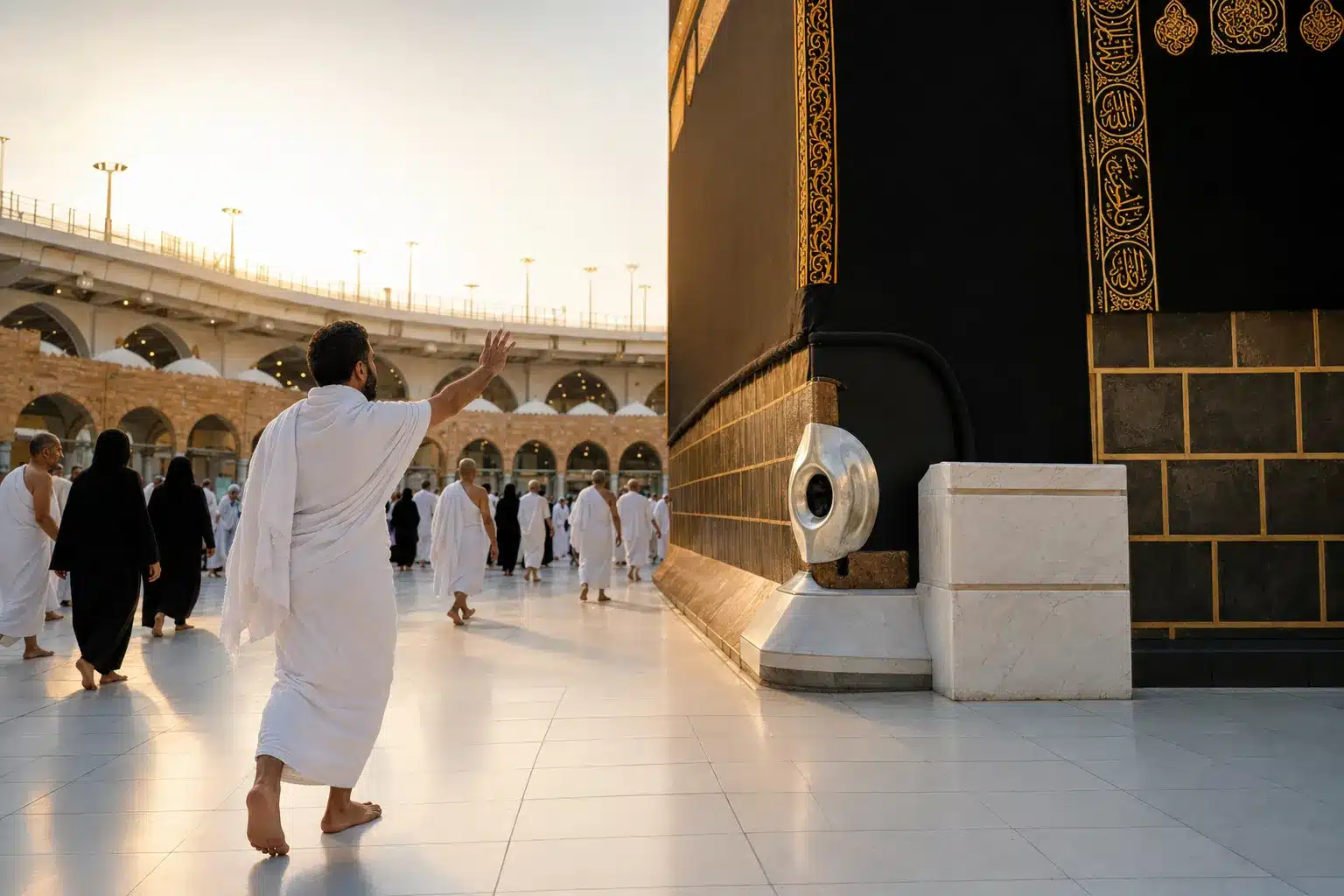
A well-known supplication recited between Rukn al-Yamani and the Black Stone is:
رَبَّنَا آتِنَا فِي الدُّنْيَا حَسَنَةً وَفِي الْآخِرَةِ حَسَنَةً وَقِنَا عَذَابَ النَّارِ
Transliteration: Rabbana atina fid-dunya hasanatan wa fil-akhirati hasanatan wa qina ‘adhaban-nar.
Meaning: Our Lord, grant us good in this world and good in the Hereafter, and protect us from the punishment of the Fire.
This comprehensive dua may be recited each time you pass through that section. It asks for wellbeing in this life, success in the next and protection from punishment.
The following themes are not mandatory prayers assigned by the Shariah to individual circuits. They are simply a practical way to organise personal duas. You may follow them, change their order, repeat one request throughout the entire Tawaf or pray spontaneously.
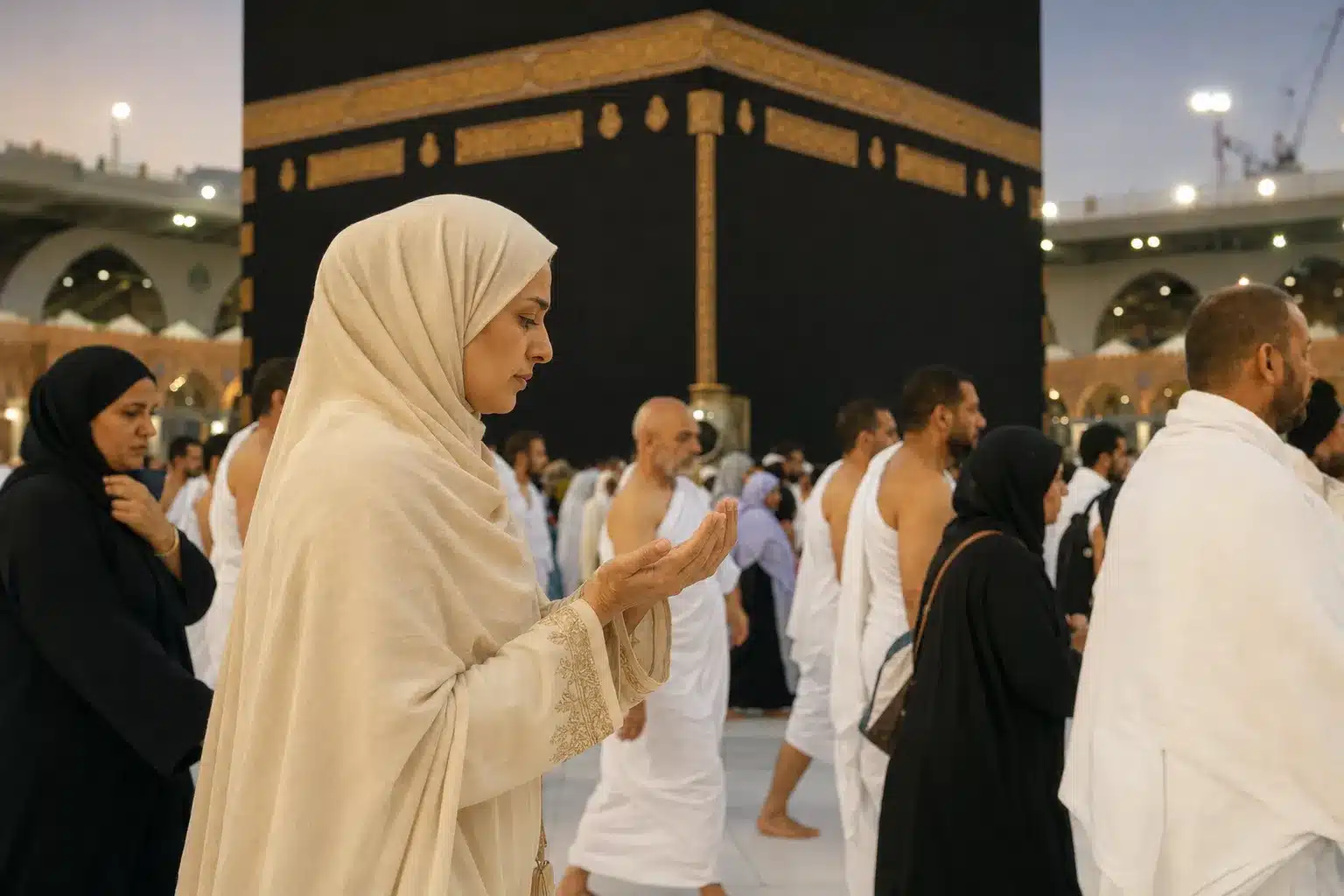
Begin by asking Allah to guide your heart and accept your worship. Pray for sincerity, correct intentions and the ability to remain steadfast after returning home.
You may ask for:
Travellers booking Cheap Umrah Packages UK should remember that spiritual preparation matters as much as comparing flights and hotels. Learning the basic rites beforehand can reduce anxiety and help you worship with greater confidence.
Use the second circuit to acknowledge your mistakes and seek Allah’s mercy. Repentance is not limited to recalling major sins; it also includes asking forgiveness for neglected duties, hurtful words, wasted time and hidden faults.
A short form of istighfar is:
أَسْتَغْفِرُ اللهَ وَأَتُوبُ إِلَيْهِ
Transliteration: Astaghfirullaha wa atubu ilayh.
Meaning: I seek Allah’s forgiveness and repent to Him.
Repeat it calmly while reflecting on its meaning. Ask Allah to help you leave harmful habits rather than merely regretting them for a moment.
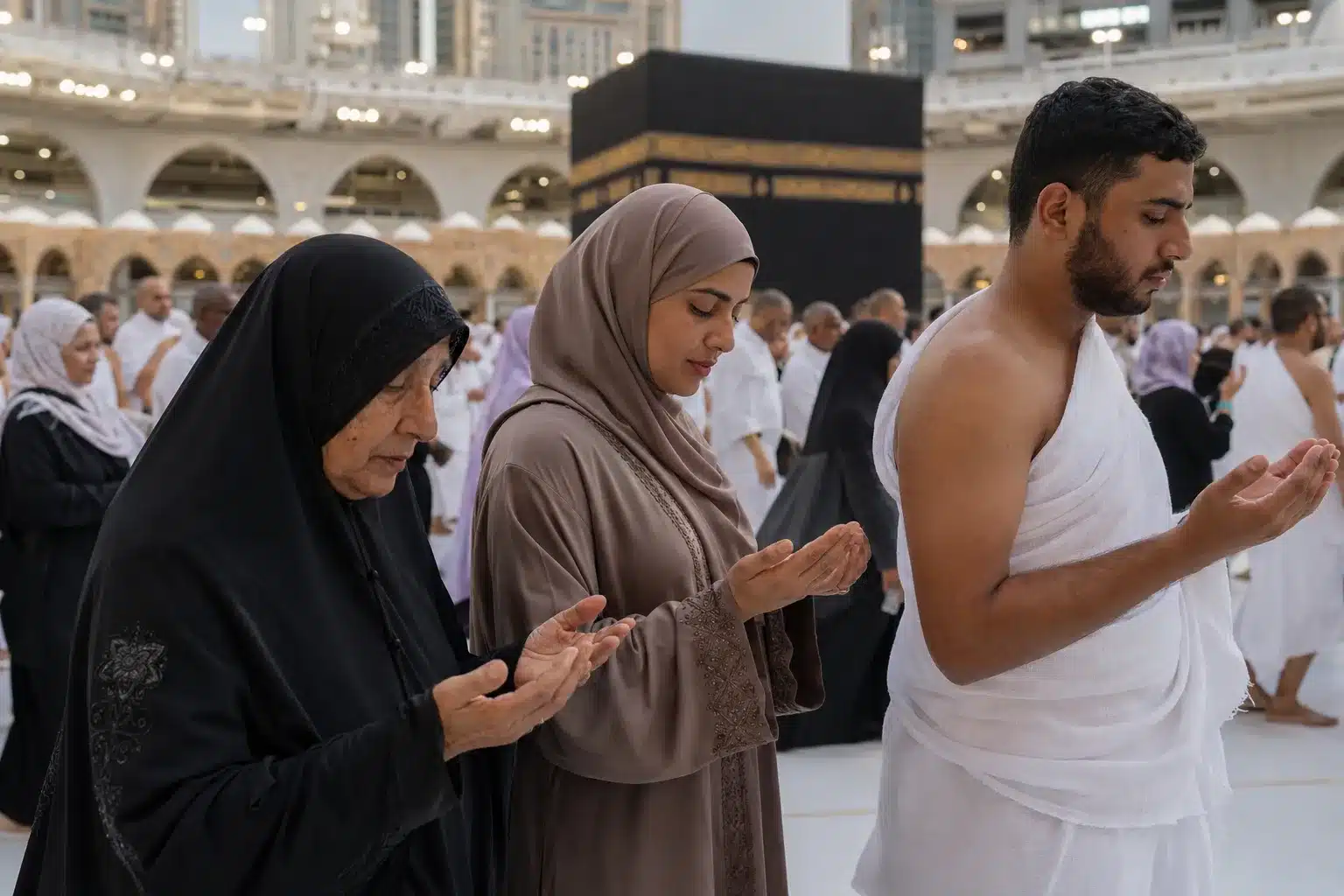
Pray for parents, spouses, children, siblings and those who requested your duas. Include relatives who have passed away and people facing illness, grief, debt or family difficulty.
Useful prompts include:
If you are travelling with relatives through group umrah packages, agree on a meeting point before entering crowded areas. You do not need to remain shoulder-to-shoulder during Tawaf if doing so disrupts others or creates safety concerns.
This circuit can focus on balanced goodness. Ask Allah for halal provision, beneficial knowledge, sound health and a peaceful heart without forgetting the far greater needs of the Hereafter.
Pray for:
The comprehensive Rabbana atina dua is especially suitable because it joins worldly and eternal wellbeing in one concise request.
Bring your worries honestly before Allah. You may ask for physical healing, emotional strength, freedom from debt or a solution to a problem that appears impossible.
Pray for people suffering across the world as well as your own needs. Dua is personal, but it does not have to become self-centred. This is also a good point to ask Allah to grant patience and reward to anyone enduring a test.
Those considering Cheap December Packages should prepare for changing crowd levels and cooler evenings, while still carrying water and pacing themselves. Fatigue can make concentration difficult, so rest before entering the Haram when possible.
Use the sixth round to widen your prayers. Ask for peace, justice, guidance and relief for Muslims everywhere. Remember refugees, orphans, the oppressed, people in poverty and those unable to reach the sacred places.
You may also pray for:
This broader focus helps Tawaf become not only an intimate personal experience but also a reminder of belonging to a global Ummah.
In the final circuit, ask Allah to accept the Tawaf, forgive its shortcomings and allow the journey to transform your life. Pray that the worship does not end emotionally when the trip ends physically.
Ask for:
Pilgrims exploring the best Ramadan Umrah Packages UK should plan for intense crowds and longer walking times. Completing Tawaf safely and attentively is more important than forcing a route close to the Kaaba.
Yes. A pilgrim may ask Allah for personal needs in a language they understand. Arabic Qur’anic supplications are valuable and worth learning, but a person should not believe that Allah only accepts requests made in Arabic.
Using your own language can help you:
It is also perfectly acceptable to alternate between Qur’anic duas, simple dhikr and personal supplication.
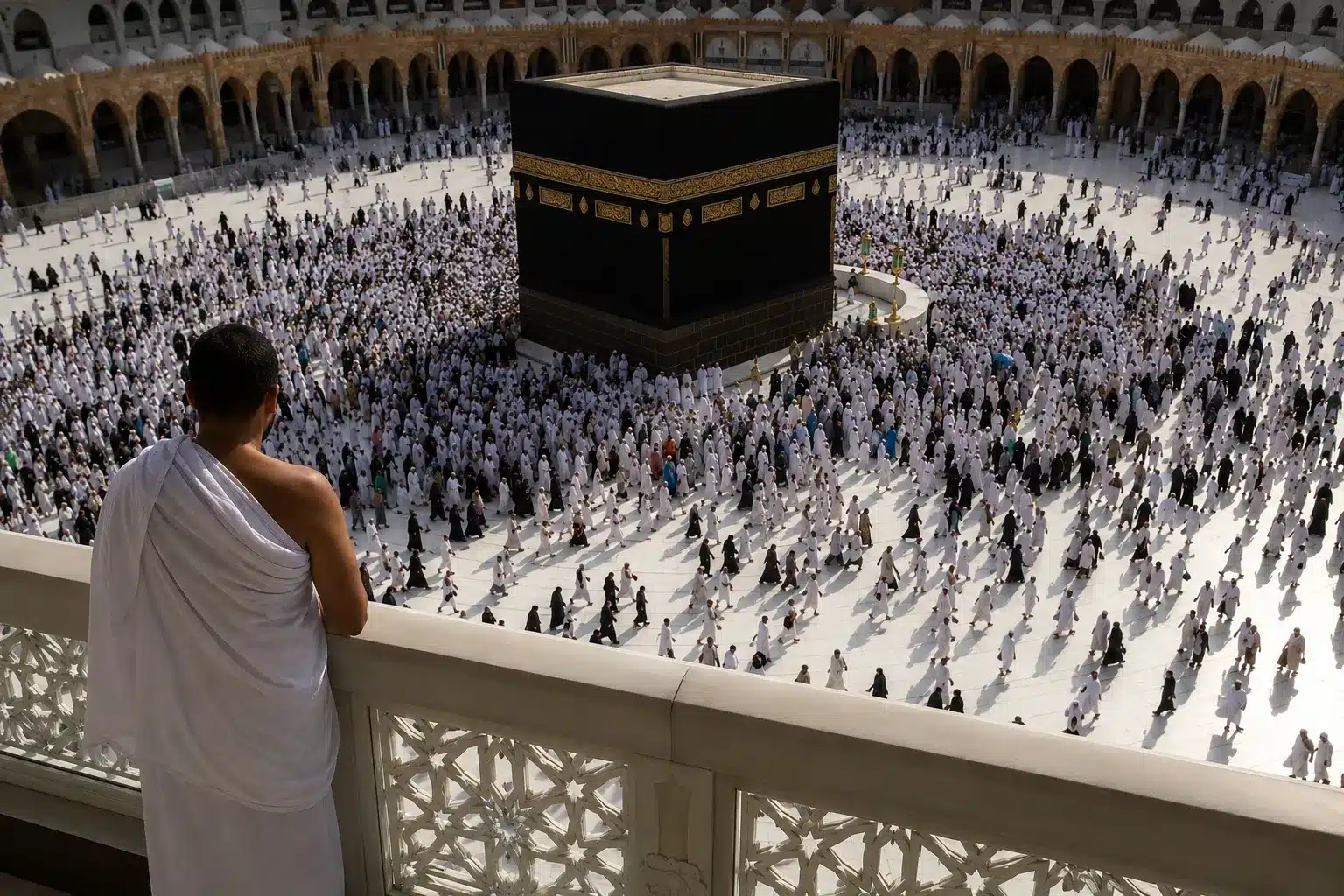
The walking distance depends on the floor, the open route and how far the pilgrim is from the Kaaba. This is why published estimates differ. A larger circle naturally creates a longer circuit.
As a practical planning estimate, the tawaf distance on second floor is often described as roughly 400 metres per circuit, or about 2.8 kilometres for seven circuits. Treat this as an approximation rather than a guaranteed measurement because barriers, access arrangements and designated walking lanes may change.
Upper levels may provide a calmer route for wheelchair users, elderly pilgrims and families, but the additional distance can require more time and stamina. Follow current Haram signs and staff directions rather than relying entirely on an old map or online estimate.
Once the seventh circuit is complete, leave the Tawaf flow carefully without crossing abruptly in front of other pilgrims.
After Tawaf:
Maqam Ibrahim can become extremely crowded. Do not insist on praying directly behind it when doing so would inconvenience or endanger others; the prayer can be offered elsewhere in Masjid al-Haram.
For an additional collection of recitations, consult this Prayer of Tawaf reference and distinguish optional devotional material from what is specifically established for the ritual.
No. There is no requirement to recite a separate fixed dua in each round. Make sincere supplications, perform dhikr or recite Qur’an.
Yes. You may repeat a single dua in every circuit, especially if it expresses an important personal need.
Base your count on the number about which you are certain, then complete the remaining circuits. If confusion continues, ask a knowledgeable guide.
Not necessarily. Understanding, sincerity and humility matter more than length.
You may use a small booklet or phone if it helps, provided it does not distract you or obstruct other pilgrims.
Tawaf is not a test of how many Arabic pages a pilgrim can memorise. It is an act of worship built on intention, remembrance, humility and complete dependence on Allah.
Learn the simple established recitations, prepare personal duas before travelling and use the seven optional themes only as a support for concentration. Whether you pray quietly in your own words or repeat a short Qur’anic supplication, remain conscious of the One to whom you are speaking.
Complete every circuit patiently, protect the safety of others and finish with the hope that Allah accepts your Tawaf and makes its effect visible in the life you live after Umrah.
Our curated content will ensure you’re well–prepared and inspired every step of the way.