
The Experience of Women in Hajj: What To Know
June 3, 2025 No Comments
Hajj and Umrah are important trips that follow the route taken by the Prophet Muhammad…

Home / Ihram Rules for Women During Umrah: A Complete Guide
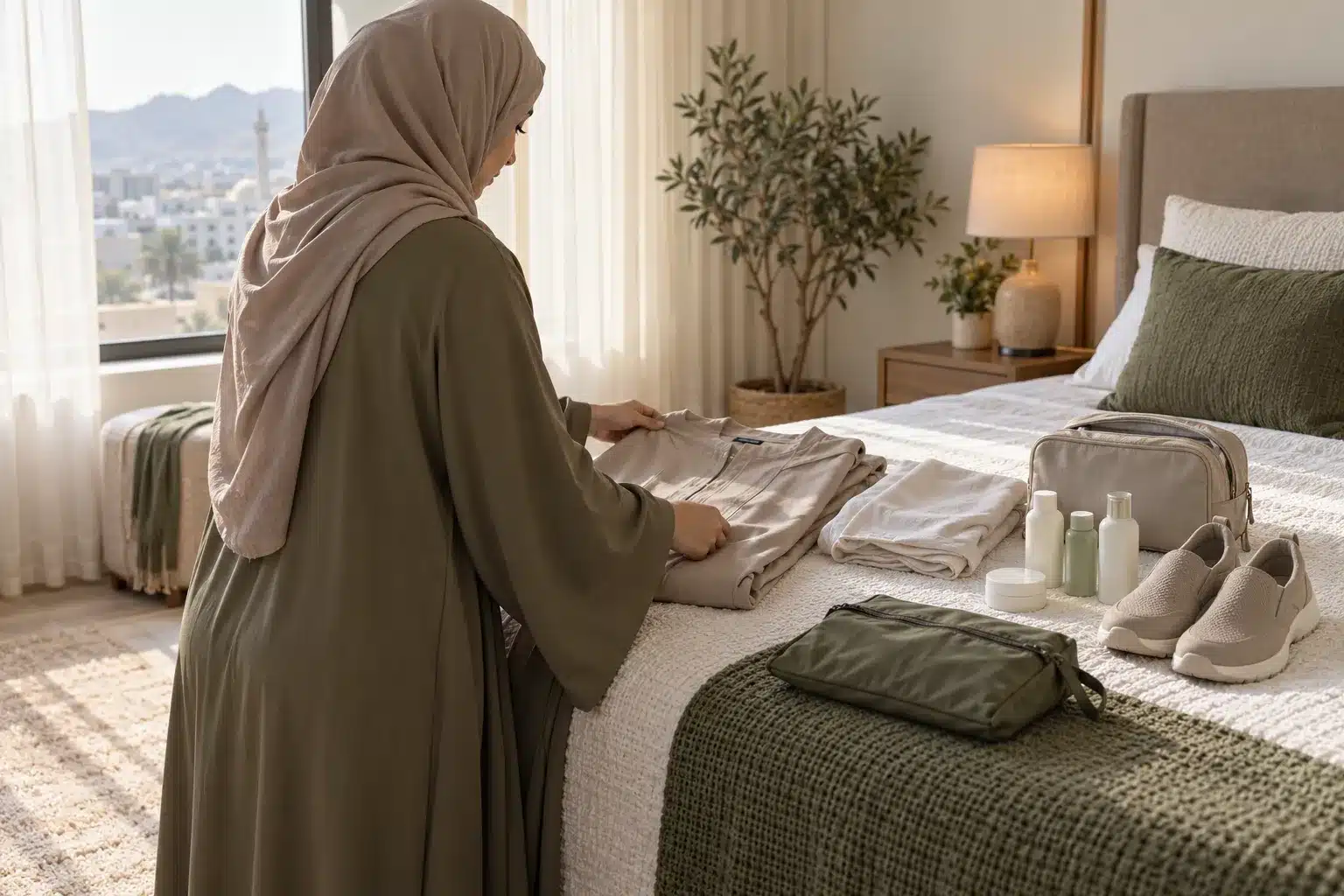
Understanding the Ihram Rules for Women is an essential part of preparing for Umrah. Many first-time pilgrims assume that Ihram simply means wearing a particular outfit. In Islamic law, however, Ihram is primarily a sacred state entered through intention and Talbiyah. Clothing is important, but it is only one part of the ruling.
Allah commands Muslims to complete Hajj and Umrah for His sake in Surah Al-Baqarah 2:196. A woman should therefore learn the relevant rules before travelling, especially those concerning clothing, the Miqat, menstruation, Tawaf, perfume, hair cutting and face covering.
This complete guide explains the principal Ihram rules for ladies during Umrah, supported by the Qur’an, authentic hadith and recognised principles of Islamic jurisprudence. Some detailed rulings differ between schools of Islamic law, so women facing unusual medical or travel circumstances should consult a qualified scholar who understands their situation.
Ihram is the sacred state in which a Muslim begins Hajj or Umrah. The word is connected to tahrim, meaning that certain normally permissible actions temporarily become prohibited.
A woman enters Ihram by:
Merely putting on an abaya or another modest outfit does not place a woman in Ihram. Equally, changing her clothes after making the intention does not end her Ihram.
Once she has entered this state, she remains in Ihram until she completes Tawaf, Sa’i and Taqsir, unless a recognised legal exception applies.
Understanding this distinction is one of the most important parts of learning the women’s Ihram rules for Umrah. Ihram is a condition of worship, not simply the name of a garment.
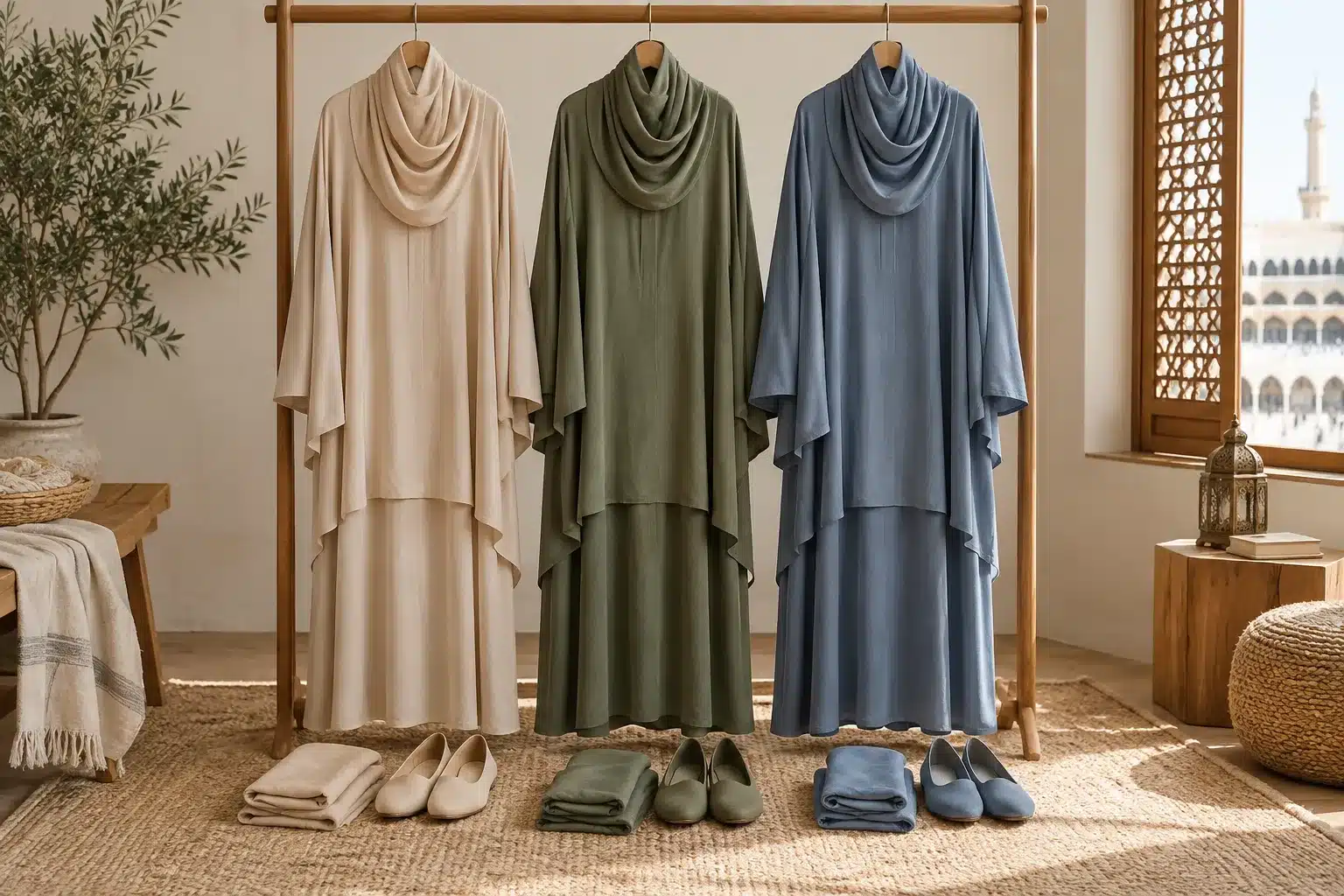
Women do not have a prescribed two-piece Ihram garment like men. A woman may wear normal stitched clothing provided it meets the Islamic requirements of modesty.
Suitable Ihram clothing for women should be:
An abaya is practical, but it is not a condition for the validity of a woman’s Ihram. She may wear a long dress, jilbab, shalwar kameez or another modest outfit.
Women staying close to Masjid al-Haram may find it easier to return to their hotel to rest or change clothing when necessary. Travellers who value proximity and additional comfort can consider Umrah Best 5 Star Umrah Packages UK when planning their accommodation.
No. There is no authentic evidence requiring women to wear white during Umrah. Black, brown, blue, beige and other permissible colours may be worn.
White clothing can sometimes become transparent under bright light. The priority is proper coverage, not copying the two white garments prescribed for male pilgrims.
Women should also remember that “stitched clothing” is not forbidden to them. That restriction concerns the form-fitting garments ordinarily worn by men, not women’s sewn clothing.
These female Ihram clothing rules are based on modesty and proper coverage rather than a specific colour, fabric or uniform.
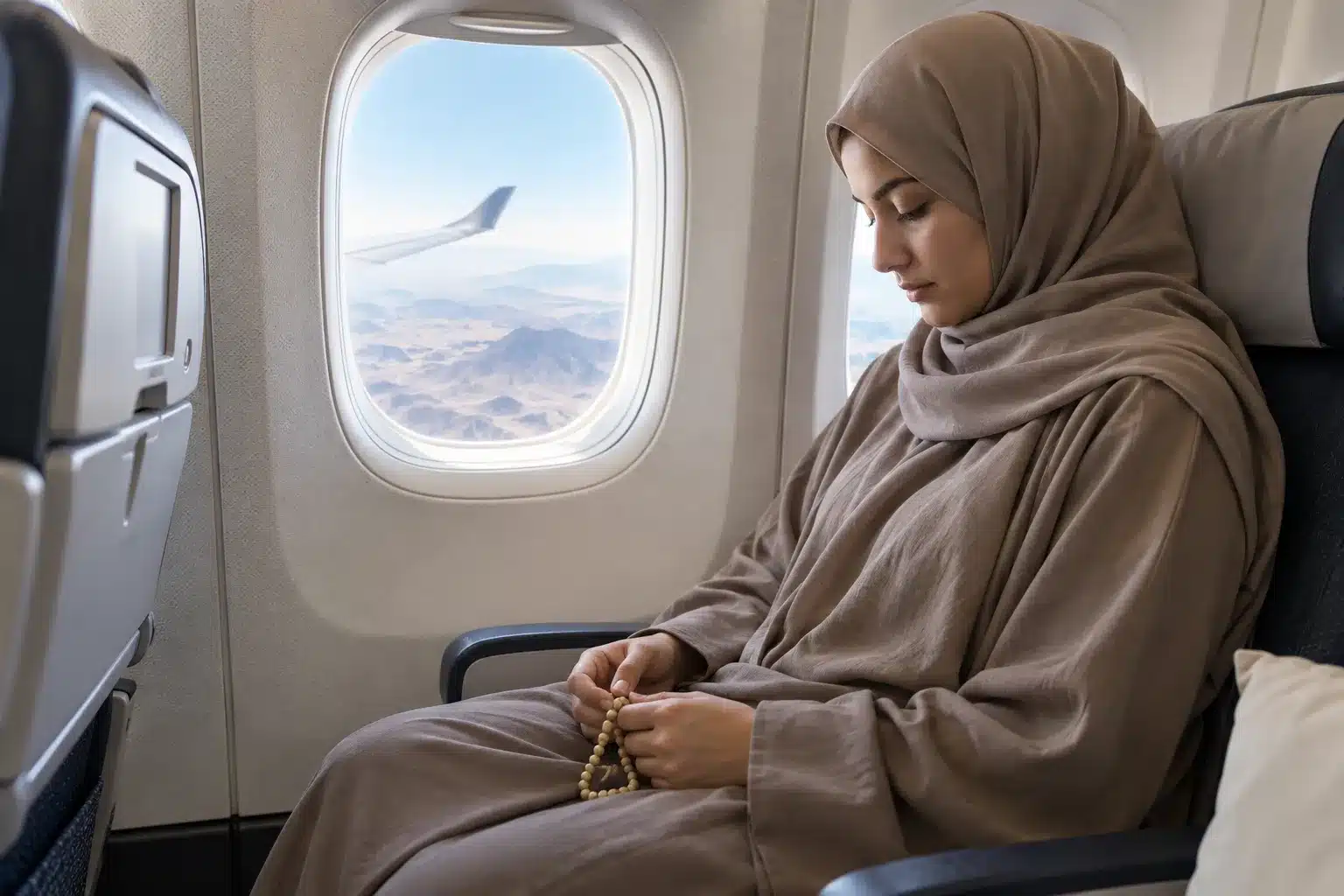
Before reaching the Miqat, it is recommended to prepare carefully. Preparing at home reduces uncertainty during the journey and helps a woman enter the sacred state calmly and correctly.
A woman should perform Ghusl before entering Ihram when reasonably possible. This is recommended even for a woman who is menstruating or experiencing postnatal bleeding.
The evidence includes the instruction given to Asma bint ‘Umays when she gave birth during the pilgrimage journey. The Prophet ﷺ instructed her to bathe, use a cloth for protection and enter Ihram, as recorded in Sahih Muslim 1218.
Ghusl before Ihram is recommended preparation. It should not be confused with the Ghusl required after menstruation ends.
Before making the intention, she may:
These actions should ideally be completed before entering Ihram because deliberately cutting the hair or nails becomes prohibited afterwards.
Pack clearly labelled fragrance-free items, including:
Products described as “lightly scented” are still scented. Checking labels before departure is much easier than conducting a toiletries investigation in a hotel bathroom at 2 a.m.
Women comparing Cheap All Inclusive Umrah Deals should also check whether practical guidance, suitable transfers and conveniently located accommodation are included. A low price is useful, but pilgrims should still ensure that their arrangements give them enough time and support to observe the Umrah Ihram rules for women properly.

A woman must enter Ihram before crossing the Miqat applicable to her route. The Prophet ﷺ established specific Miqat points for pilgrims travelling from different directions, as narrated in Sahih al-Bukhari 1524.
A woman travelling from Madinah normally enters Ihram at Dhul-Hulaifah, also known as Abyar Ali. Those travelling by air towards Jeddah must be ready before the aircraft crosses the relevant Miqat line.
She may change into suitable clothing earlier, but the sacred state begins when she makes the intention and starts the Talbiyah.
The intention is in the heart. She may then say:
Labbayka Allahumma ‘Umrah
Here I am, O Allah, intending Umrah.
She continues with the Talbiyah:
Labbayka Allahumma labbayk. Labbayka la sharika laka labbayk. Innal-hamda wan-ni‘mata laka wal-mulk, la sharika lak.
Women should recite the Talbiyah audibly enough to hear themselves but should not deliberately raise their voices loudly among unrelated men.
A woman who reasonably fears that illness or another serious condition may prevent her from completing Umrah can ask a knowledgeable scholar about making a condition when entering Ihram.
The Prophet ﷺ instructed Duba‘ah bint al-Zubair, who was unwell, to enter Ihram while stipulating that she would leave Ihram at the place where she was prevented. This is recorded in Sunan an-Nasa’i 2767.
This is not a routine phrase that every pilgrim must say. It applies particularly where there is a genuine concern about being unable to continue.
After entering Ihram, several restrictions apply to both women and men. These Ihram restrictions for women remain in place until Umrah has been completed correctly.
A woman must not intentionally apply perfume after entering Ihram. This includes fragrance placed on:
Perfume may be applied before entering Ihram. Aisha (RA) reported applying fragrance to the Prophet ﷺ before he assumed Ihram, as recorded in Sahih al-Bukhari 1539.
The key distinction is between fragrance applied before the intention and new perfume deliberately used afterwards. If some pre-Ihram scent remains naturally, she is not required to scrub it away.
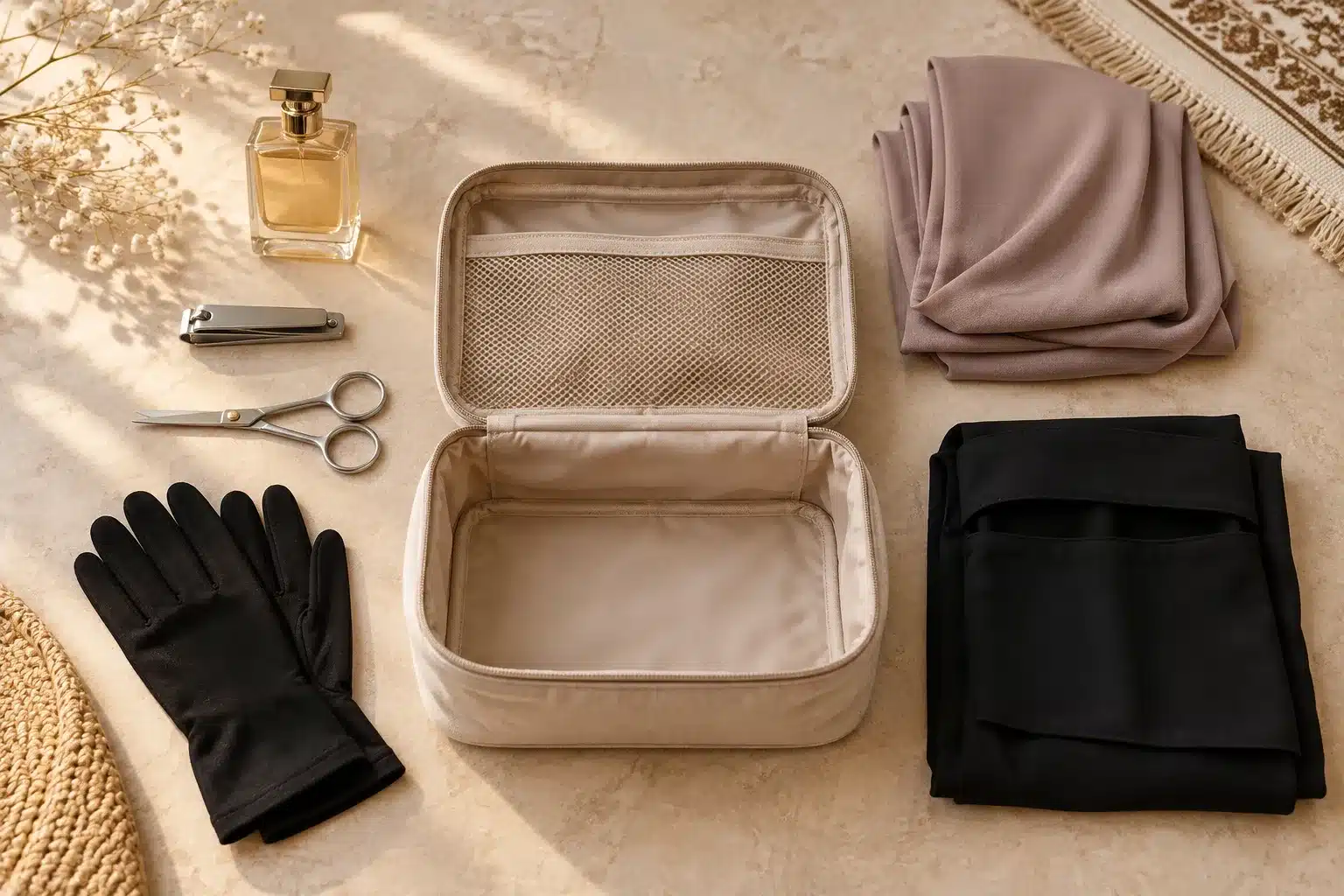
After entering Ihram, a woman must not deliberately:
Unintentional hair loss is treated differently. If a strand falls while washing, adjusting the hijab or gently combing without an intention to remove hair, she is not sinful merely because it detached naturally.
A genuinely harmful broken nail may be removed to prevent injury. Because compensation rulings can differ according to the circumstances and school of law, a pilgrim should consult a scholar if she deliberately removes hair or nails while in Ihram.
The Prophet ﷺ specifically said that a woman in Ihram should not wear a niqab or gloves, as recorded in Sahih al-Bukhari 1838.
This means she should not wear:
The prohibition does not mean that modesty is abandoned. Her hair, neck and body remain covered.
Scholars have discussed how a woman who ordinarily covers her face should respond when unrelated men are close. Reports from the female Companions are used by many jurists to permit lowering a loose part of the head covering over the face when needed, without wearing a fitted niqab.
The precise details differ among legal schools. A woman who regularly covers her face should therefore obtain guidance from a trusted scholar before travelling.
While in Ihram, spouses must avoid:
Allah says regarding pilgrimage:
“There is to be no sexual relations, disobedience, or disputing during Hajj.”
This principle appears in Surah Al-Baqarah 2:197 and applies to the sanctity and discipline of pilgrimage.
Intercourse before completing Umrah is a serious violation and can affect the validity of the pilgrimage. Anyone facing this situation must ask a qualified scholar for a case-specific ruling.
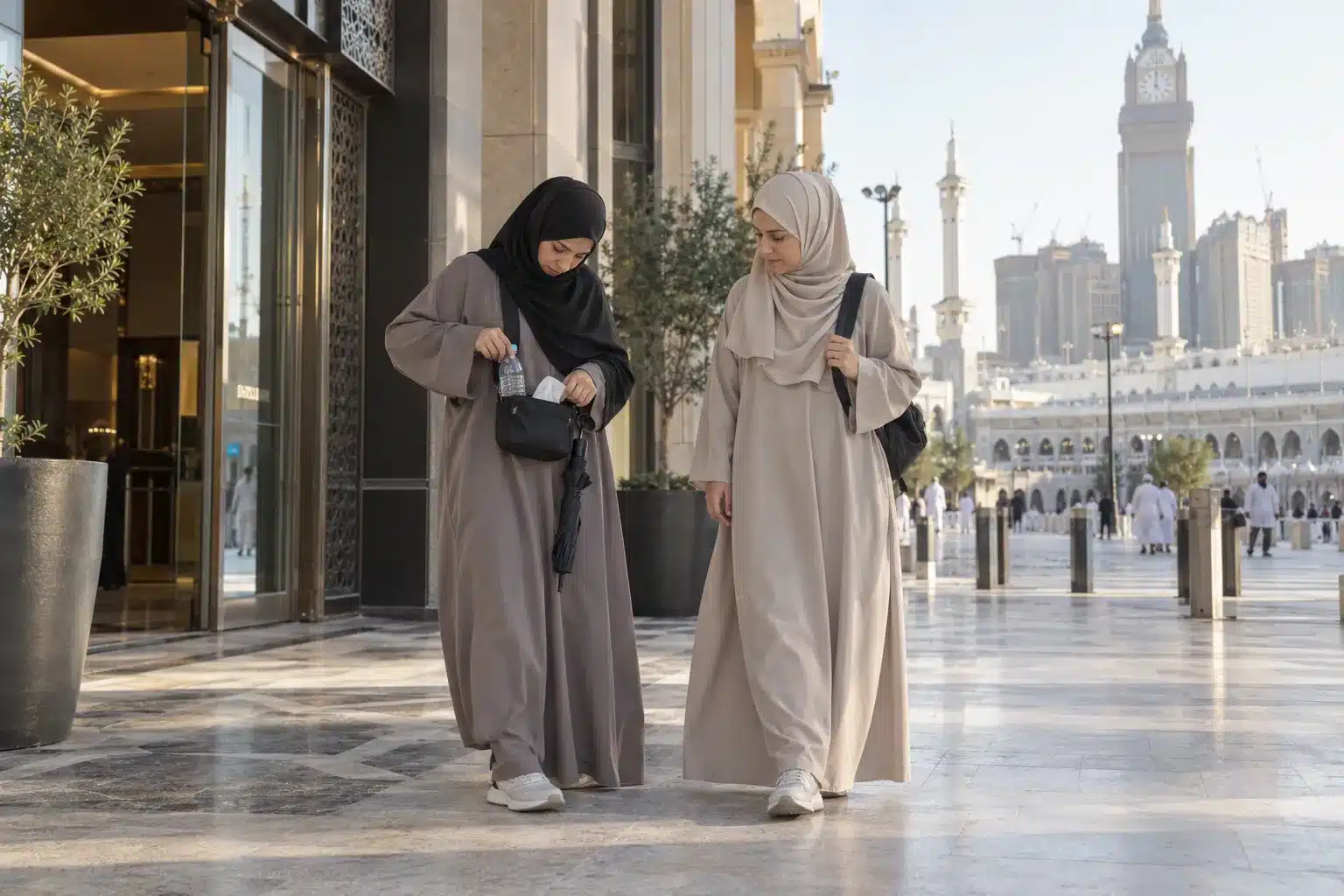
Ihram is spiritual discipline, not merely a wardrobe category. A woman should guard herself against:
Large crowds, heat and fatigue can test a pilgrim’s patience. Responding calmly is itself part of honouring the sacred journey.
This preparation becomes especially important during peak periods. Women considering Ramadan Umrah Packages From the UK should expect heavier crowds, longer walking times and busier prayer areas. Learning the rules beforehand can help pilgrims remain patient and spiritually focused during Ramadan.
Hunting permitted wild land animals is prohibited during Ihram. Most modern pilgrims will never encounter this situation directly, but it remains one of the established restrictions mentioned in Surah Al-Ma’idah 5:95.
A woman may generally:
There is no general prohibition on looking in a mirror. Make-up is not automatically an Ihram violation merely because it is make-up, but scented products must be avoided, and normal Islamic standards of modesty and non-display still apply.
For simplicity and to avoid questionable ingredients or fragrance, many women choose not to wear cosmetics during Umrah.
Yes. One of the common misunderstandings about Ihram for female pilgrims is that a woman must remain in the same clothing throughout Umrah.
She may change her dress, abaya, hijab, underclothes or socks whenever necessary. Changing clothing does not end Ihram because Ihram is a sacred state created by intention, not a permanent attachment to one outfit.

Menstruation does not prevent a woman from entering Ihram.
If her period begins before reaching the Miqat, she should:
She does not perform Salah during menstruation, but she can continue with Talbiyah, dhikr, dua and other permitted acts of worship.
The Prophet ﷺ treated menstruation with reassurance rather than shame. When Aisha (RA) became distressed after her period began during pilgrimage, he explained that it was something Allah had decreed for the daughters of Adam.
The established majority ruling is that a menstruating woman waits until her period ends, performs Ghusl and then completes Tawaf.
When Aisha (RA) began menstruating during pilgrimage, the Prophet ﷺ told her to perform what the other pilgrims performed except Tawaf until she became pure. This is recorded in Sahih al-Bukhari 305.
For a fuller explanation of this important subject, read: Can Women Perform Tawaf During Their Period?
If a woman has an exceptional situation—such as an unavoidable departure, serious illness or bleeding whose legal classification is uncertain—she should speak to a qualified scholar. Detailed rulings concerning menstruation, irregular bleeding and necessity differ, and a generic internet answer should not be used to diagnose a complicated case.
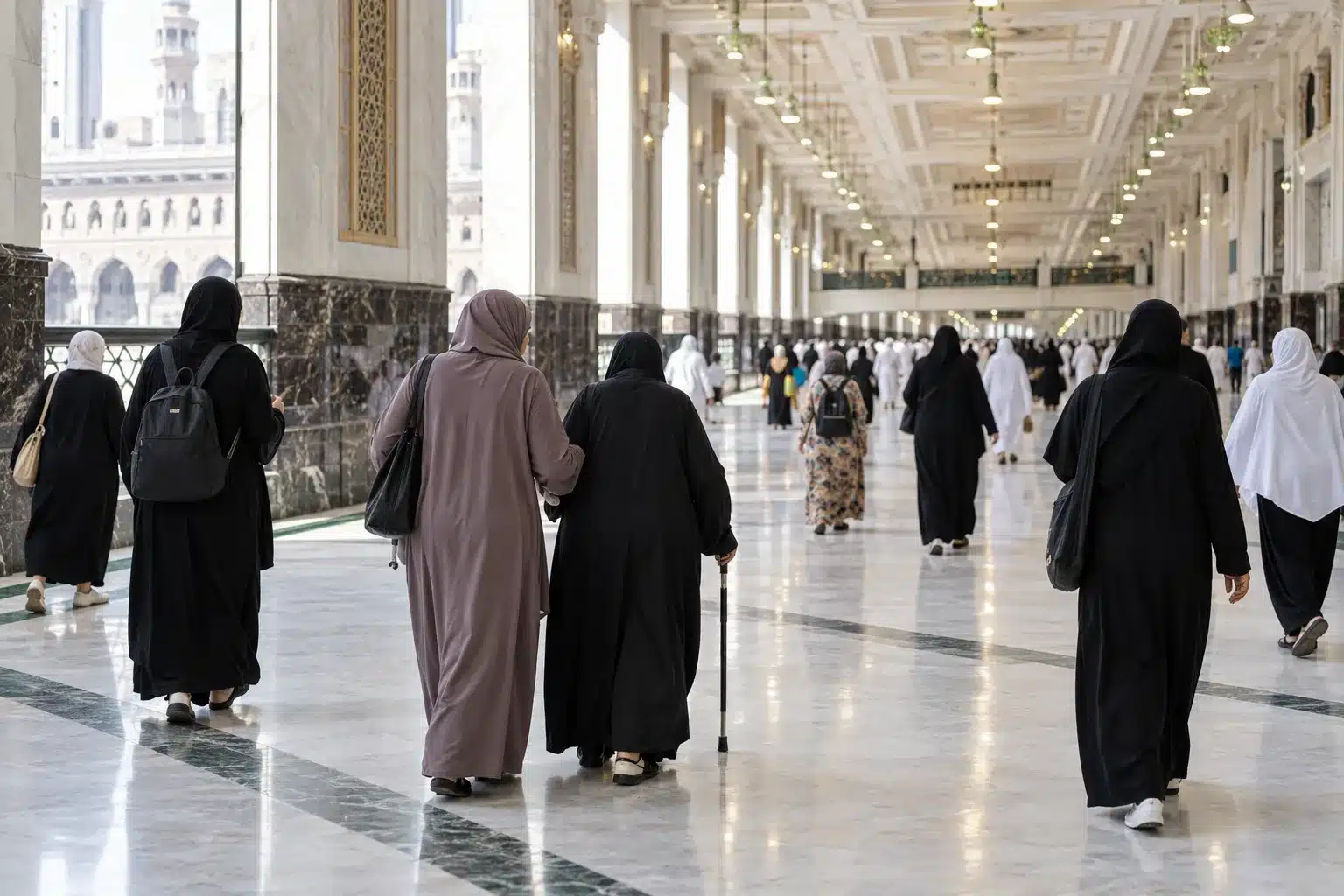
The normal order of Umrah is Tawaf followed by Sa’i. If menstruation starts before Tawaf, she waits and does not proceed with the ordinary Umrah sequence until she is pure.
If she completed a valid Tawaf and menstruation began afterwards, many scholars allow her to perform Sa’i because ritual purity is not generally considered a condition for Sa’i in the same way it is for Tawaf.
She should confirm the ruling according to her school of jurisprudence if uncertainty remains.
While waiting to become pure, she may generally:
Scholars differ regarding certain matters, including reciting Qur’an directly and handling a physical mushaf during menstruation. A woman should follow reliable scholarly guidance rather than assuming that every form of worship has become unavailable to her.
The normal sequence is:
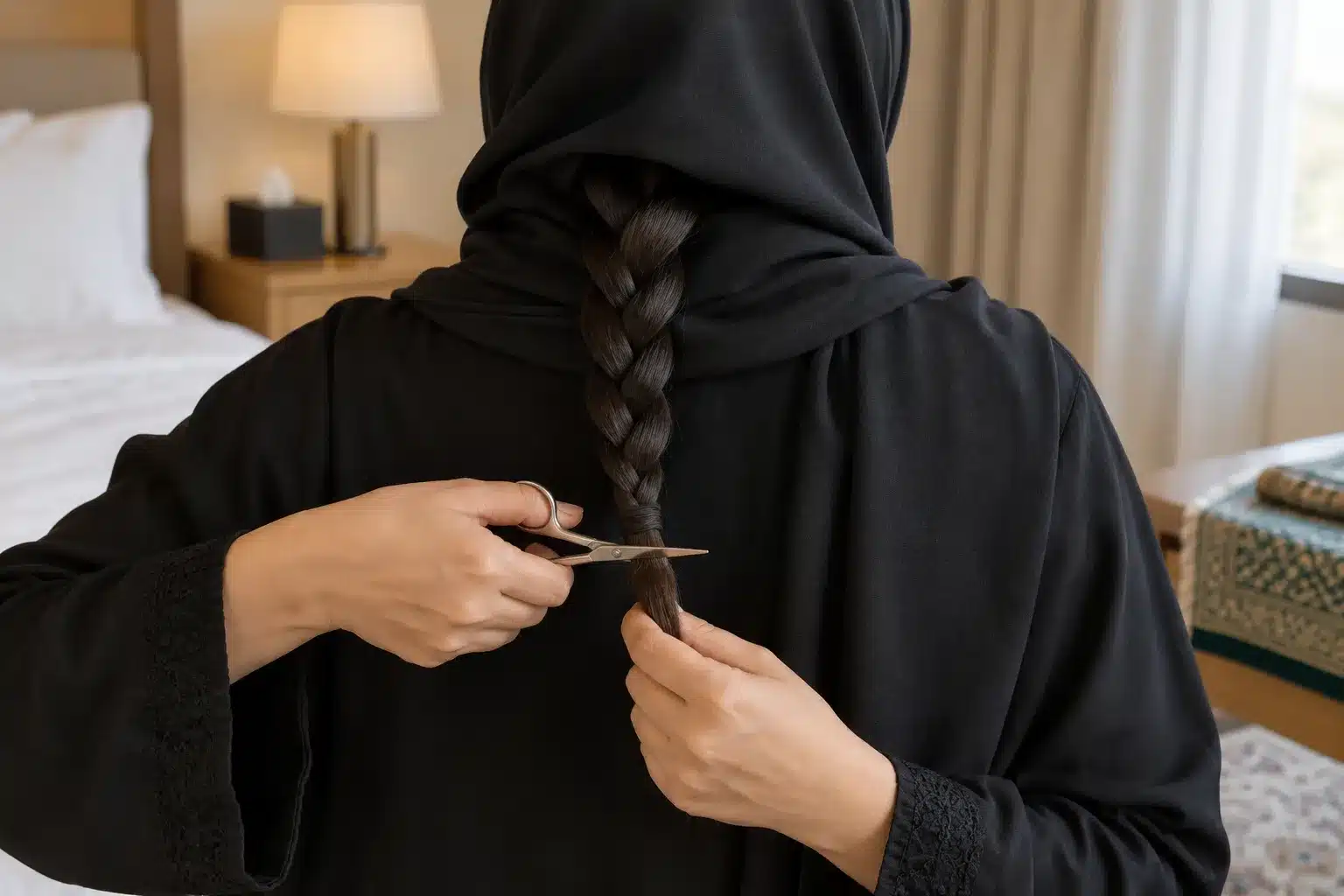
A woman performs Taqsir, not shaving. The Prophet ﷺ prayed for mercy upon women who shorten their hair, as reported in Sunan Abi Dawud 1984.
A practical method is to gather the hair—or sections from the ends—and cut approximately a fingertip’s length. Juristic descriptions differ slightly, so women following a particular madhhab should observe its guidance.
Once valid Taqsir is completed after Tawaf and Sa’i, she leaves Ihram and its temporary restrictions end.
A woman should not cut her hair early simply because other group members have finished. She must first complete her own Tawaf and Sa’i.
The rules of Ihram for women become easier to observe when practical arrangements are made in advance.
Select breathable clothing that remains opaque under sunlight. Avoid outfits that require constant adjustment or become difficult to manage during Tawaf and Sa’i.
Women travelling during the cooler UK holiday season can review Cheap December Packages while remembering that daytime temperatures in Makkah may still feel warm. Layering is usually more practical than packing only heavy clothing.
Choose shoes that:
Umrah involves considerable walking, even when the hotel appears close to the Haram on a map.
Women should agree on a meeting point with family or group members in case they become separated. Keeping the hotel address and group-leader contact details in a small bag is also sensible.
Those preparing for their first pilgrimage may find additional practical insight in The Experience of Women in Hajj. Although Hajj and Umrah are different journeys, women encounter several similar considerations involving privacy, crowds, physical exertion and personal preparation.
A small bag may contain:
Avoid carrying unnecessary weight because even a modest bag begins developing the personality of a suitcase after several rounds of Tawaf.
Some frequently encountered mistakes include:
Bring:
The scissors used for Taqsir should remain safely packed until the rituals have been completed. Pilgrims flying with hand luggage should also check current airline security restrictions.
No. Women may wear any permissible colour. Clothing should be loose, opaque, modest and suitable for worship.
Yes. Women may wear stitched garments, including an abaya, dress, trousers beneath an outer garment, socks and normal footwear.
Yes. Ihram is a sacred state, not one unchangeable outfit. She may change clothing for cleanliness, comfort or necessity without renewing her intention.
Yes. Women may wear sandals, trainers or other comfortable footwear. Shoes should be practical for long periods of walking and easy to identify after removing them at mosque areas.
Yes. Women may wear socks during Ihram. The footwear restrictions that apply to men do not apply to women in the same manner.
Ordinary jewellery is not one of the established prohibitions of Ihram for women. However, she should avoid unnecessary display, extravagance and anything likely to attract undue attention.
Make-up is not automatically prohibited solely because it is cosmetic. However, fragranced products must be avoided, and modesty must be maintained. Leaving it off is usually the simpler and safer practical choice.
Unscented deodorant may be used. Perfumed deodorant should not be applied after entering Ihram.
Unscented sunscreen may generally be used. A pilgrim should check that it does not contain fragrance and should seek scholarly guidance if she is uncertain about a particular product.
She may gently arrange or wash her hair when needed, but she should avoid rough combing intended or likely to remove hair unnecessarily. Naturally detached strands do not carry the same ruling as deliberate cutting.
No. Hair that falls without deliberate removal does not end Ihram. Ihram is not broken simply because a strand comes away naturally.
She must not wear a fitted niqab while in Ihram. Many jurists permit her to lower loose fabric from her head covering when unrelated men approach. Because details differ among schools, women who regularly cover their faces should seek madhhab-specific advice.
Medical necessity can affect the ruling. Because a mask covers part of the face and individual circumstances vary, a woman who needs one should consult a qualified scholar regarding its use and whether any compensation applies.
She still enters Ihram at the Miqat and observes its restrictions. She waits until she becomes pure and performs Ghusl before Tawaf.
If Tawaf was completed validly before menstruation began, she may generally proceed with Sa’i and complete her Umrah, subject to the guidance of her school of law.
Yes. She may make dua, recite the Talbiyah, send salawat upon the Prophet ﷺ, seek forgiveness and engage in dhikr.
Questions about reciting directly from a physical mushaf or remaining inside particular mosque areas involve additional jurisprudential details and should be referred to a scholar.
No. Losing Wudu does not cancel Ihram. However, ritual purity is required for Salah, and the majority of scholars require it for Tawaf.
No. Sleeping does not end the state of Ihram. If sleep invalidates her Wudu, she renews Wudu when it is required, but she remains in Ihram.
Yes. She may shower, wash and maintain personal hygiene. She should use unscented products and avoid deliberately removing hair.
No. A woman shortens a small portion from the ends of her hair. She does not shave her head.
A commonly followed practice is to cut approximately a fingertip’s length from the ends. The precise juristic requirement varies, so she should follow reliable guidance from her school of Islamic law.
Yes. She may cut her own hair after completing Tawaf and Sa’i. Another woman who has already completed her Umrah may also assist her.
She should stop using it once she remembers and remove it where reasonably possible. The ruling concerning compensation depends on knowledge, forgetfulness, intention and the nature of the product, so she should consult a qualified scholar rather than guessing.
If she intended to perform Umrah but crossed the Miqat without entering Ihram, she should obtain immediate scholarly guidance. Returning to the Miqat may correct the mistake in some circumstances; otherwise, compensation may be required according to the applicable ruling.
The Ihram Rules for Women are designed to preserve the sanctity, humility and spiritual focus of Umrah. A woman does not need a special white uniform, nor does menstruation stop her from entering Ihram. She may wear normal modest clothing, change her clothes, use unscented products and continue making dua and dhikr.
The central Umrah rules for women in Ihram are to enter the sacred state before crossing the Miqat, avoid perfume, refrain from deliberately cutting hair or nails, avoid fitted face veils and gloves, maintain modest conduct and delay Tawaf during menstruation.
After becoming pure, she can perform Tawaf, complete Sa’i and shorten her hair to leave Ihram.
Our curated content will ensure you’re well–prepared and inspired every step of the way.