What Is Zamzam? A Detailed Introduction & Importance
January 16, 2026 No Comments
For millions of believers across the globe, the journey to Makkah is incomplete without tasting…

Home / The Story of Zamzam Water: History, Benefits, Blessings & Dua
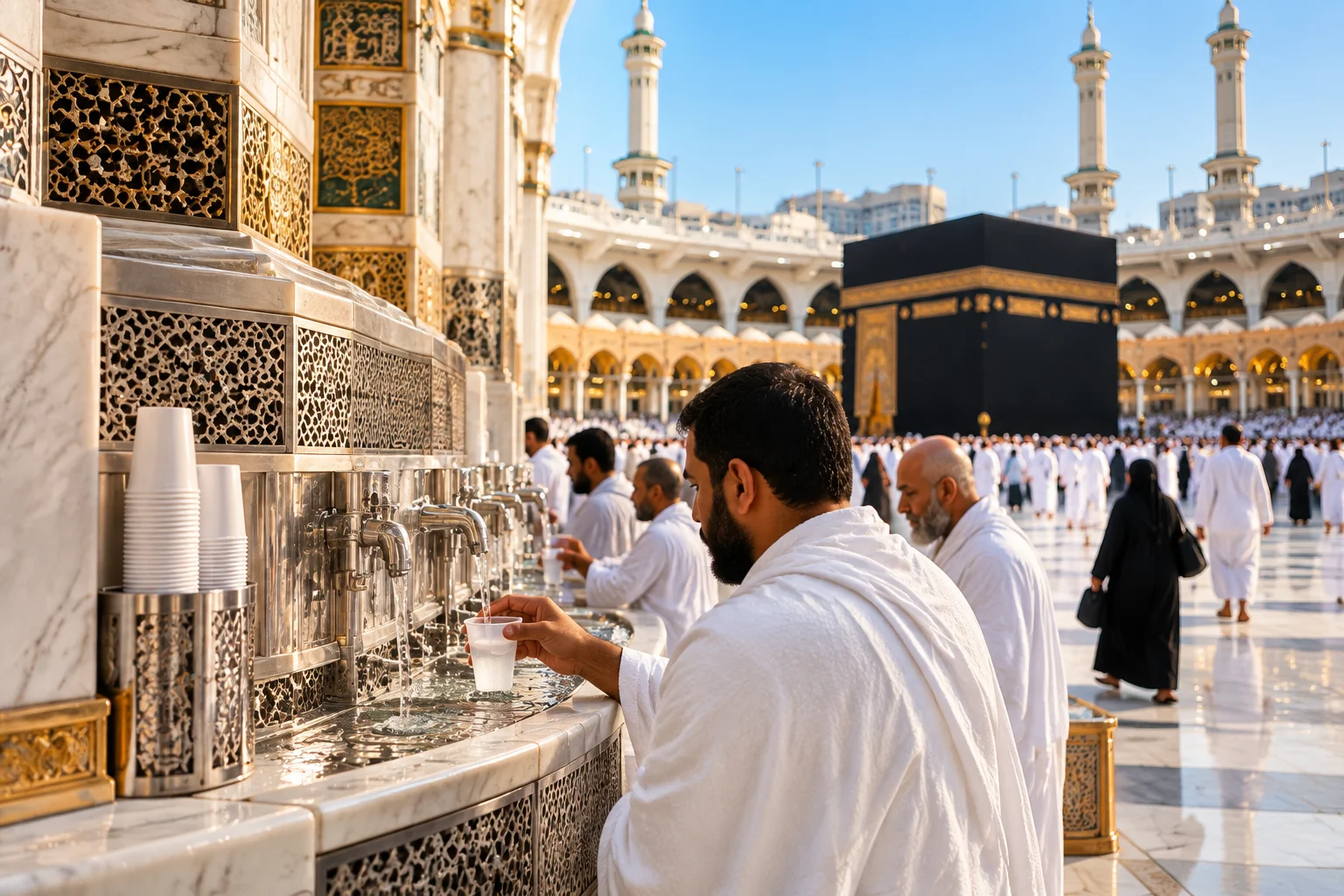
Zamzam water is the blessed water that Allah provided for Prophet Ismail (AS) and his mother Hajar (RA) in the sacred city of Makkah. It is considered one of the greatest signs of Allah’s mercy, and Muslims around the world drink it because of its spiritual significance, blessings, and connection with the story of Prophet Ibrahim (AS), Hajar (RA), and Ismail (AS).
Located inside Masjid al-Haram in Makkah, the Zamzam well has remained a source of water for thousands of years. Millions of pilgrims drink Zamzam water during Hajj and Umrah, take it home for their families, and make dua while drinking it. For Muslims, this blessed water is not only a physical drink but also a reminder of faith, patience, and Allah’s endless mercy.
Many pilgrims visiting Makkah include drinking Zamzam water as an important part of their spiritual journey. If you are planning your pilgrimage, you can explore suitable Umrah packages designed to make your journey easier and more meaningful.
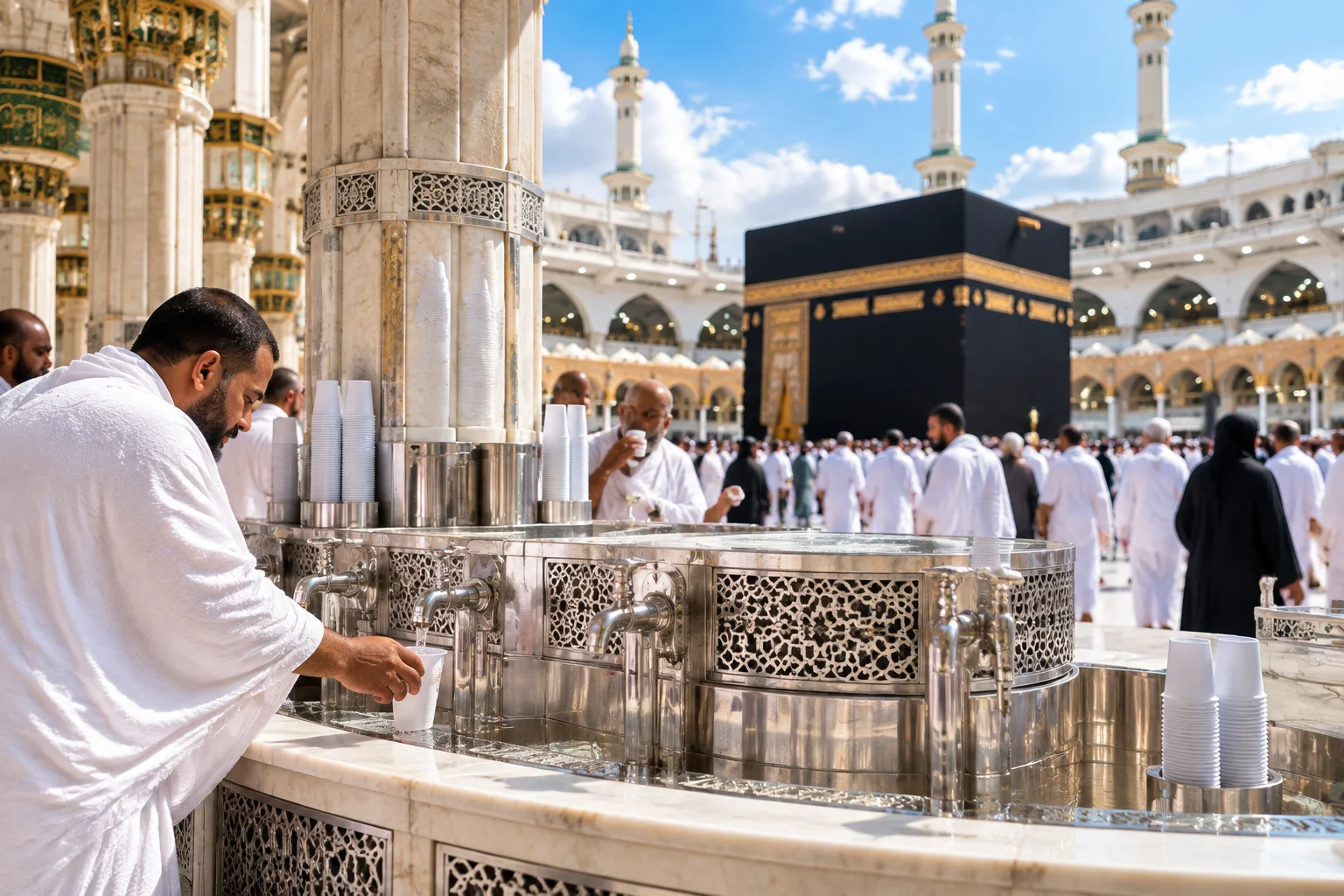
Zamzam water is a sacred water source located near the Kaaba in Masjid al-Haram, Makkah, and it holds a special position in Islam because of its miraculous origin and connection with the family of Prophet Ibrahim (AS).
The name Zamzam refers to the famous well from which this water comes. According to Islamic tradition, Allah created this water as a mercy for Hajar (RA) and her infant son Ismail (AS) when they were left in the valley of Makkah.
Unlike ordinary water sources, Zamzam water is connected with one of the most important stories of patience and trust in Allah. The story teaches Muslims that Allah can create solutions from situations that appear impossible.
For a detailed introduction, you can also read:
What Is Zamzam? A Detailed Introduction
The story of Zamzam water began when Prophet Ibrahim (AS), following Allah’s command, left his wife Hajar (RA) and their young son Ismail (AS) in the barren valley of Makkah.
At that time, Makkah was a dry and empty land with no visible source of water. Prophet Ibrahim (AS) left Hajar (RA) with only limited food and water, trusting Allah’s command.
When their water supply finished, Hajar (RA) searched desperately for help and water for her child.
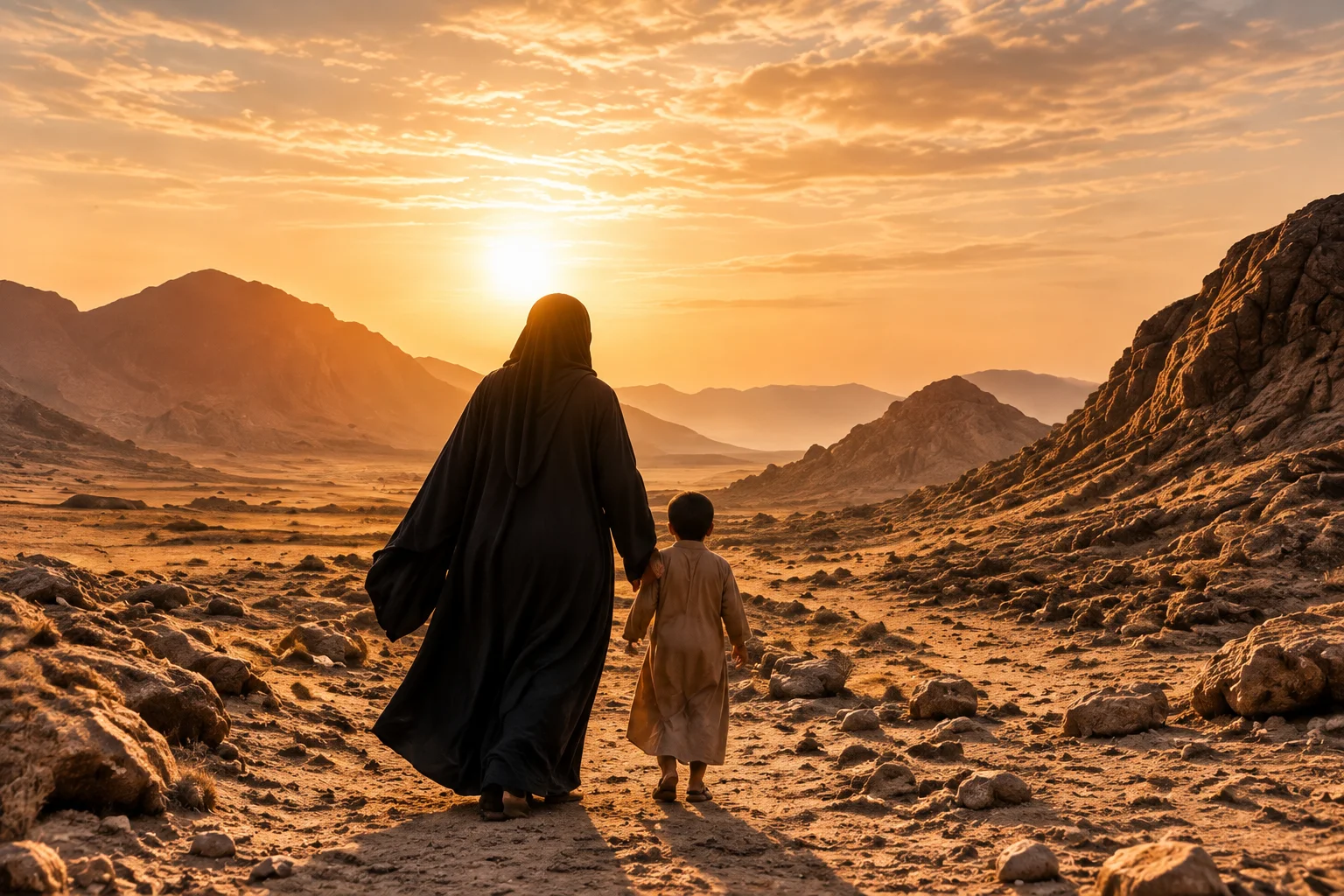
Hajar (RA) ran between the hills of Safa and Marwah searching for someone who could help her and looking for a source of water.
She climbed both hills repeatedly, hoping to find travelers or assistance. This act of searching and complete reliance on Allah later became part of the rituals of Hajj and Umrah known as Sa’i.
Allah mentions the importance of Safa and Marwah in the Quran:
“Indeed, Safa and Marwah are among the symbols of Allah…”
Surah Al-Baqarah 2:158
Reference:
https://quran.com/2/158
Zamzam water appeared through a miracle from Allah when Prophet Ismail (AS) was an infant and his mother Hajar (RA) was searching for water.
Islamic narrations mention that when Hajar (RA) returned to her child, Allah caused water to spring from the ground. The water emerged near Ismail’s feet, and Hajar (RA) gathered it, saying “Zamzam,” meaning to stop or hold back the flowing water.
The well became a source of life in the desert and eventually attracted people to settle in the area. This settlement later became the city of Makkah, the holiest city in Islam.
The traditional account of the Zamzam well and its connection with Hajar (RA) and Ismail (AS) is widely mentioned in Islamic history. Wikipedia
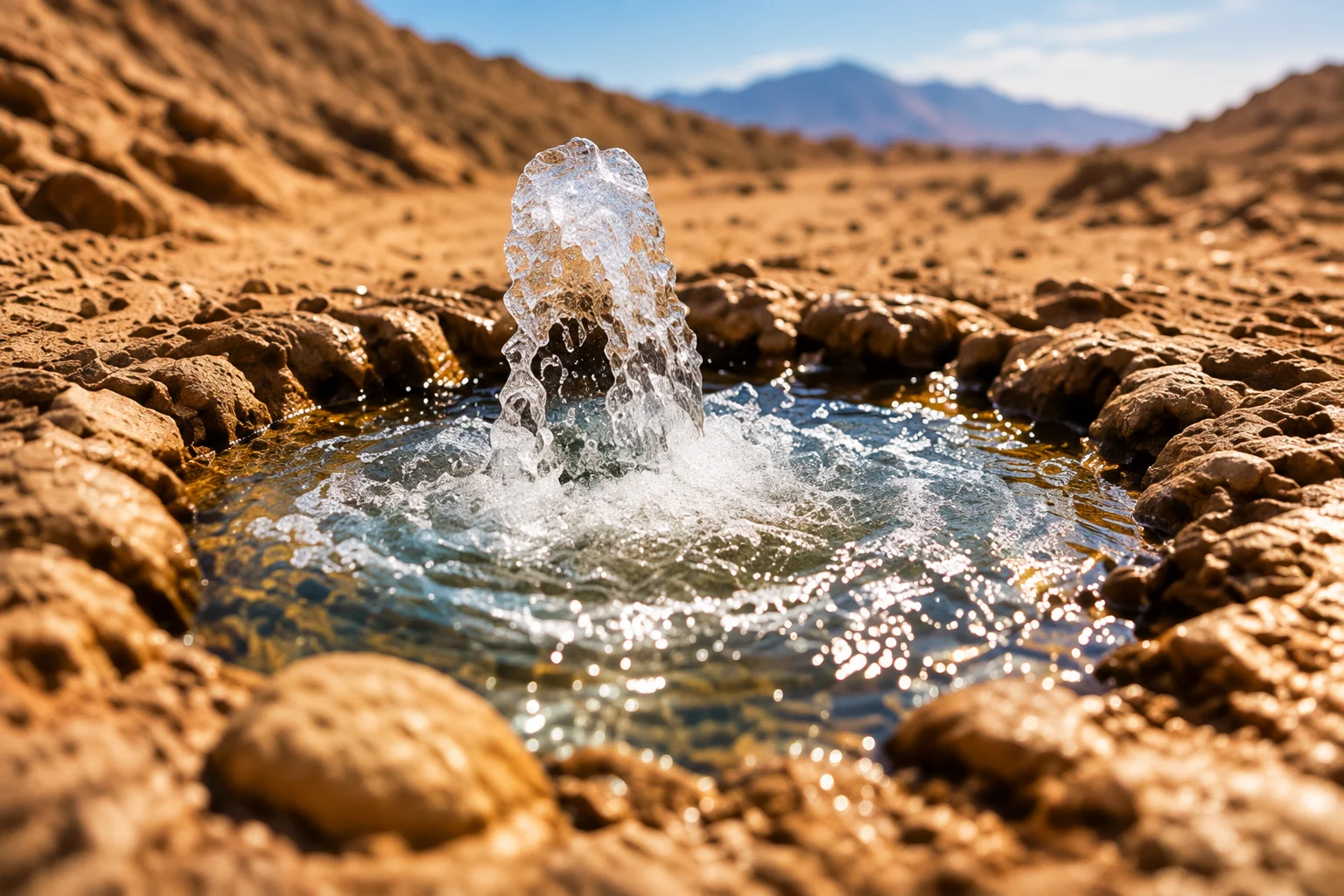
Yes, Muslims consider Zamzam water a miracle because Allah created this water source in a place where there was no apparent water supply and preserved it for thousands of years.
The miracle of Zamzam is not only about the water itself but also about the message behind it:
The survival of Zamzam water for centuries in the harsh environment of Makkah is one of the reasons many Muslims describe it as a sign of Allah’s blessings.
What makes Zamzam water special is its religious significance, its connection with the Prophets, and the blessings associated with drinking it.
Several aspects make Zamzam unique:
The history of Zamzam is directly linked with Prophet Ibrahim (AS), Prophet Ismail (AS), and Hajar (RA).
Their story represents:
The Prophet Muhammad ﷺ recognized the special status of Zamzam water and drank from it.
A famous narration mentions that the Prophet ﷺ drank Zamzam water.
Abu Dharr (RA) reported that the Prophet ﷺ said regarding Zamzam:
“It is blessed; it is food that satisfies.”
Another narration mentions:
“The water of Zamzam is for whatever it is drunk for.”
Reference:
Sunan Ibn Majah 3062
https://sunnah.com/ibnmajah:3062
Hadith collections such as Sahih al-Bukhari preserve many authentic narrations about the practices and sayings of Prophet Muhammad ﷺ. Sunnah
The benefits of Zamzam water are mainly understood through its spiritual blessings, healing significance, and importance in Islamic tradition.
Muslims believe Zamzam water has blessings because of its origin and the supplications made while drinking it.
The spiritual benefits include:
Yes, many Muslims drink Zamzam water with the intention of seeking Allah’s healing and blessings.
Islam teaches that healing comes from Allah, while water and other means are part of the ways through which people seek benefit.
The Prophet ﷺ encouraged believers to seek beneficial things and rely upon Allah.
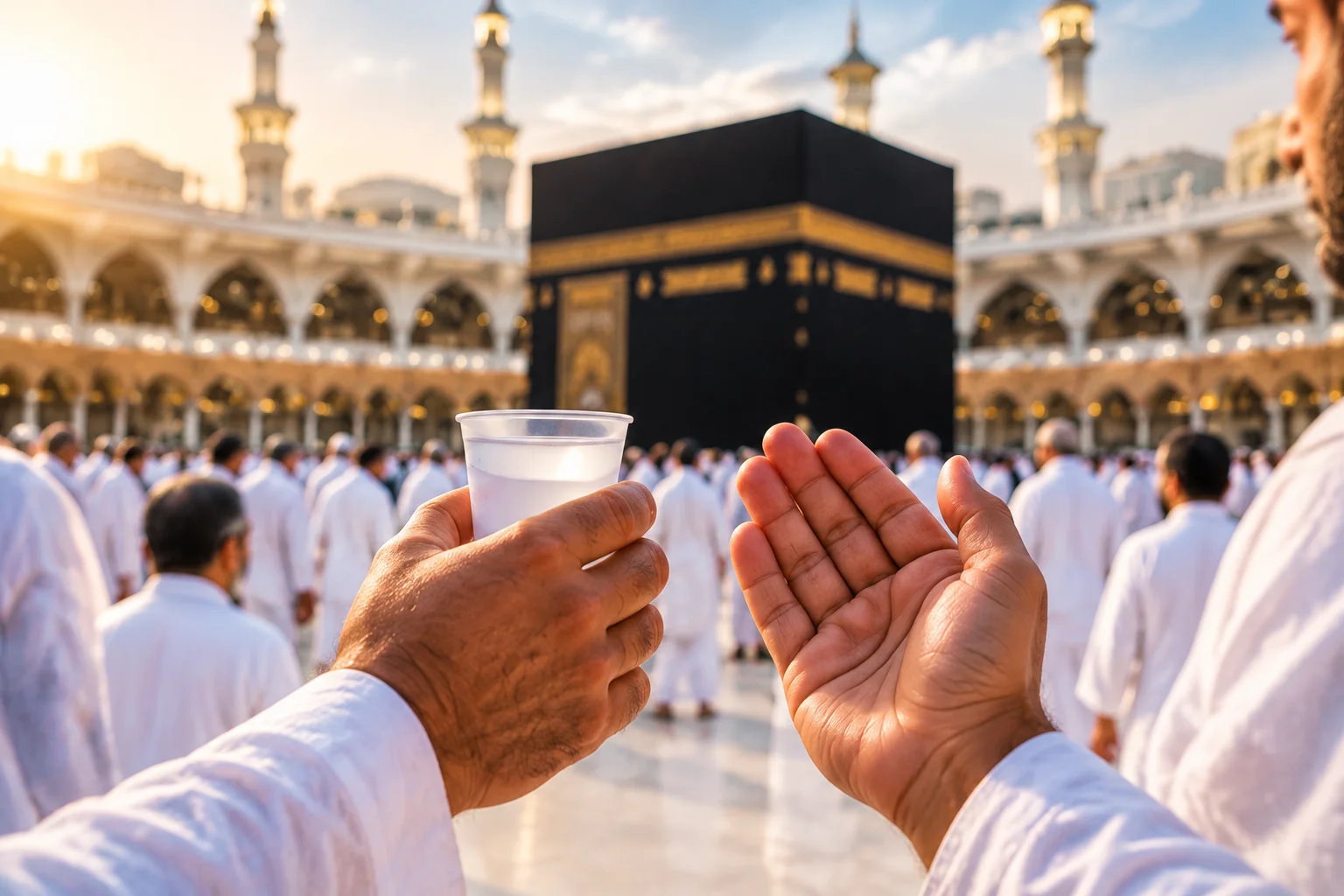
There is no single authentic dua specifically established from Prophet Muhammad ﷺ for drinking Zamzam water, but Muslims commonly make sincere personal dua while drinking it.
A commonly mentioned dua is:
اللَّهُمَّ إِنِّي أَسْأَلُكَ عِلْمًا نَافِعًا، وَرِزْقًا وَاسِعًا، وَشِفَاءً مِنْ كُلِّ دَاءٍ
Allahumma inni as’aluka ‘ilman nafi’an, wa rizqan wasi’an, wa shifa’an min kulli da’.
Meaning:
“O Allah, I ask You for beneficial knowledge, abundant provision, and healing from every illness.”
Muslims may ask Allah for anything beneficial while drinking Zamzam, such as:
Zamzam water is not considered infinite in a physical sense, but Allah has preserved this blessed water source for thousands of years despite continuous use by millions of people.
The Zamzam well has provided water for pilgrims throughout Islamic history. Every year, millions of Muslims performing Hajj and Umrah drink Zamzam water, yet the well continues to supply water.
From an Islamic perspective, the continuation of Zamzam water for centuries is viewed as a sign of Allah’s mercy and blessing.
The well is located approximately 20 to 30 meters away from the Kaaba and has been carefully maintained throughout history. Modern studies and management systems help preserve the quality and availability of Zamzam water for pilgrims.
However, saying that Zamzam water is physically unlimited would not be accurate. Like every natural water source, it depends on underground water systems and natural replenishment.
The miracle for believers is that Allah has blessed and preserved this water source in one of the busiest religious locations in the world.
Zamzam water is considered among the most special and blessed water in the world because of its religious importance, although “purest water” is not a specific Islamic title given in Quran or authentic Hadith.
Many Muslims describe Zamzam water as pure and blessed because it comes from the sacred land of Makkah and has a unique place in Islamic tradition.
Scientific studies have examined Zamzam water quality and found that it contains naturally occurring minerals. These minerals contribute to its distinct taste and composition.
However, Muslims value Zamzam water primarily because of its spiritual connection rather than only its physical characteristics.
The importance of Zamzam comes from:
Allah says:
“And whoever honors the symbols of Allah, indeed, it is from the piety of hearts.”
Surah Al-Hajj 22:32
Reference:
https://quran.com/22/32
For Muslims, Zamzam water is a blessed water that carries deep spiritual meaning.
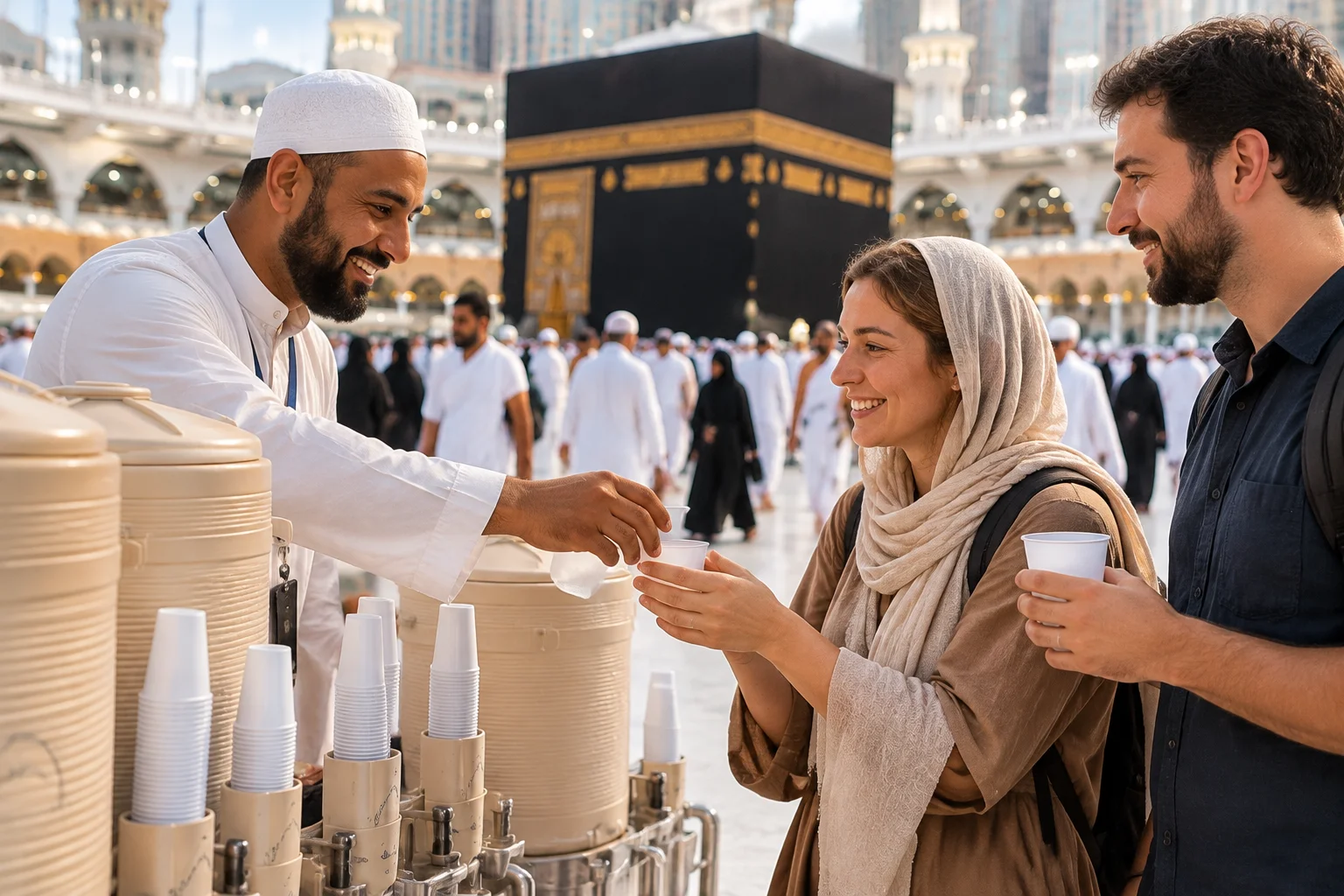
Yes, non-Muslims can drink Zamzam water, although Islamic rituals involving Zamzam are connected with Muslim worship such as Hajj and Umrah.
There is no general Islamic prohibition preventing non-Muslims from drinking Zamzam water.
Zamzam water is often shared with people of different backgrounds because Muslims believe that blessings and kindness should be shared.
However, only Muslims are allowed to perform Hajj because pilgrimage requires Islamic faith and worship practices.
Drinking Zamzam water itself is not a restricted act.
The main rule for drinking Zamzam water is to drink it with respect, remember Allah, and make sincere dua while seeking His blessings.
There are no complicated restrictions, but Muslims generally follow practices based on Islamic manners.
A Muslim may intend to seek benefit, blessings, healing, or fulfillment of a good request from Allah.
The Prophet ﷺ said:
“Actions are judged by intentions…”
Sahih al-Bukhari 1
Reference:
https://sunnah.com/bukhari:1
Like other acts of eating and drinking, Muslims begin by mentioning Allah’s name.
They say:
بِسْمِ اللهِ
Bismillah
Drinking while sitting is considered part of Islamic manners, although scholars have discussed different circumstances regarding standing.
Many Muslims make personal dua while drinking Zamzam because of the narration:
“The water of Zamzam is for whatever it is drunk for.”
Reference:
Sunan Ibn Majah 3062
https://sunnah.com/ibnmajah:3062
Muslims say:
الحمد لله
Alhamdulillah
meaning:
“All praise belongs to Allah.”
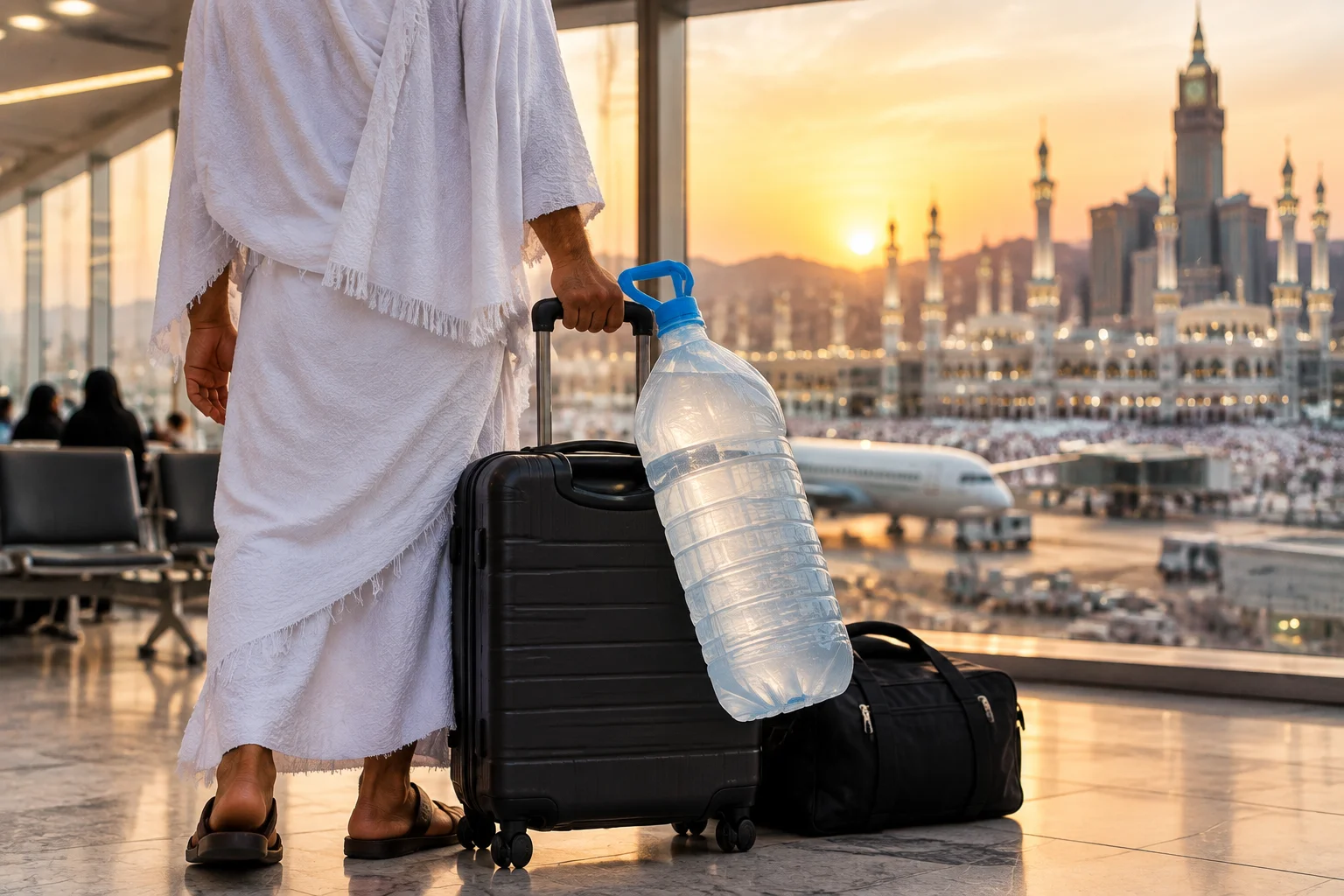
Muslims bring Zamzam water home after Umrah because they consider it a blessed gift from the sacred city of Makkah and wish to share its blessings with family and friends.
For many pilgrims, bringing Zamzam water back is an emotional part of completing their spiritual journey.
Families often drink it while making dua and remembering the holy places they visited.
People bring Zamzam water because:
If you are planning an Umrah journey and want a comfortable pilgrimage experience, you can explore our 5 star Umrah packages designed for pilgrims seeking premium accommodation and services.
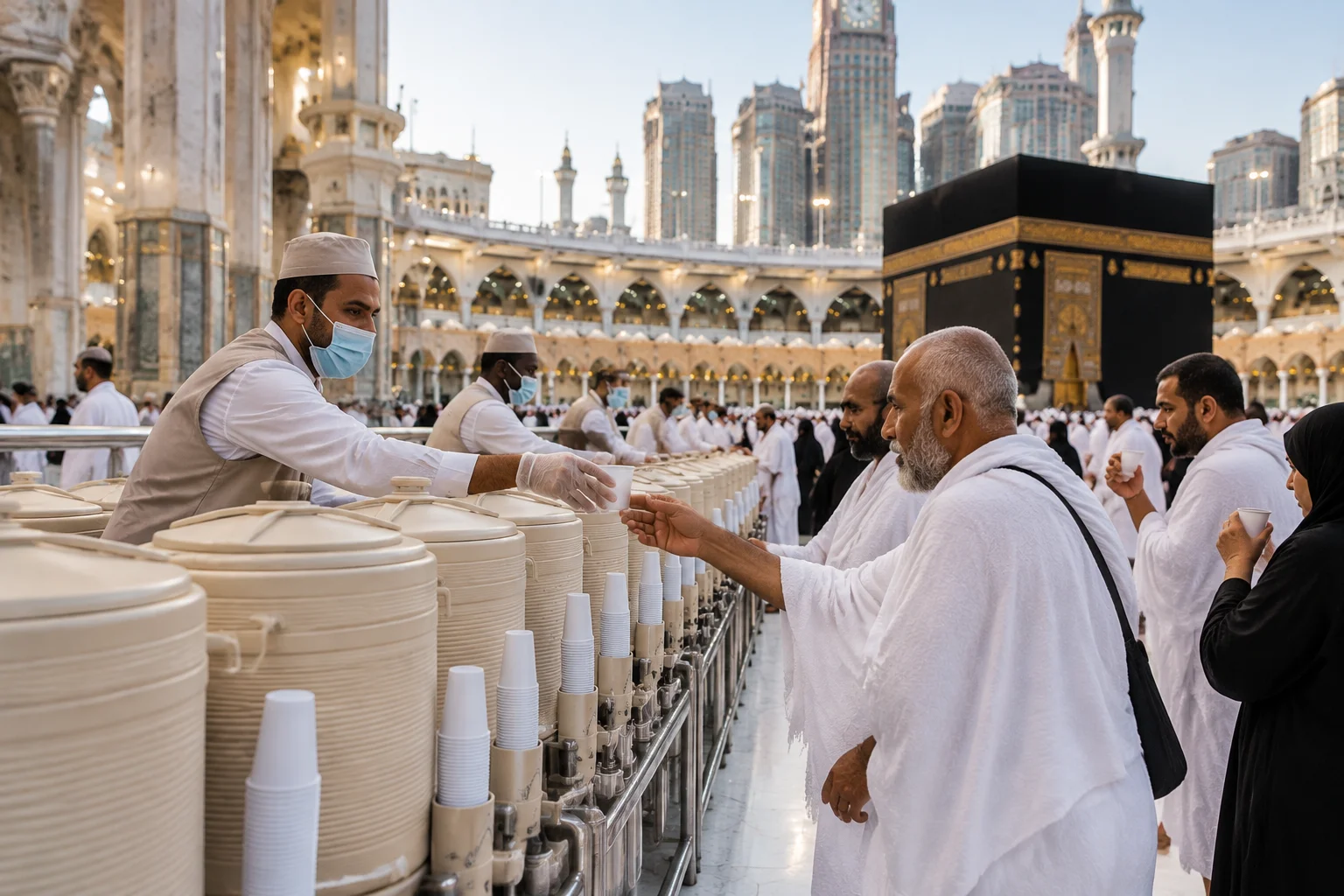
Zamzam water is preserved through modern filtration, storage, and distribution systems while maintaining its connection with the sacred well in Masjid al-Haram.
Saudi authorities have developed advanced systems to ensure that Zamzam water remains safe and available for pilgrims.
The preservation process includes:
The Zamzam well continues to serve millions of visitors every year who come for Hajj and Umrah.
The health benefits of Zamzam water are discussed mainly through Islamic tradition, where Muslims believe it carries blessings and can be a means of benefit by Allah’s permission.
The Prophet Muhammad ﷺ described Zamzam as blessed and connected it with benefit.
Muslims drink Zamzam water seeking:
However, Islam teaches that all healing ultimately comes from Allah.
The water itself is a means, while Allah is the One who provides cure and benefit.
The Zamzam water story in Islam is a story of faith, sacrifice, patience, and Allah’s mercy.
It begins with Prophet Ibrahim (AS) leaving Hajar (RA) and Ismail (AS) in the valley of Makkah.
When Hajar (RA) faced difficulty, she did not give up. She searched between Safa and Marwah while trusting Allah.
Allah rewarded her patience by creating the Zamzam spring.
This story teaches Muslims:
The ritual of Sa’i during Hajj and Umrah continues to remind Muslims of Hajar’s faith and determination.
Zamzam water is a sacred water source from a well located in Masjid al-Haram, Makkah, associated with Prophet Ismail (AS) and Hajar (RA).
Zamzam water is special because Muslims believe it is a blessed gift from Allah and a sign of His mercy connected with the story of Ibrahim (AS), Hajar (RA), and Ismail (AS).
Yes, anyone can drink Zamzam water, including non-Muslims, although Hajj-related rituals are specifically for Muslims.
Zamzam water is not physically infinite, but Allah has preserved this blessed water source for thousands of years despite continuous use.
Muslims may make any sincere dua while drinking Zamzam water. A commonly mentioned dua asks Allah for beneficial knowledge, provision, and healing.
Yes, Muslims consider Zamzam water a miracle because of its origin, preservation, and connection with the story of Hajar (RA) and Ismail (AS).
The benefits of Zamzam water include spiritual blessings, following the Sunnah, and seeking Allah’s mercy and healing.
Zamzam water is considered the most blessed water by Muslims because of its religious significance, although Quran and Hadith do not describe it with the exact phrase “purest water in the world.”
Zamzam water is more than just water; it is a symbol of Allah’s mercy, the patience of Hajar (RA), and the faith of Prophet Ibrahim (AS).
For thousands of years, Muslims have traveled to Makkah, performed Hajj and Umrah, and returned home with Zamzam water as a reminder of their spiritual journey.
Its story teaches believers that Allah can create ease after hardship and provide from places they cannot imagine.
Whether drinking it in Makkah or at home, Muslims approach Zamzam water with respect, gratitude, and sincere dua, remembering the powerful lesson behind its origin.
For those preparing for pilgrimage, choosing the right travel arrangements can make the journey easier. Learn more about our Umrah packages and begin planning your spiritual journey to the holy cities.
Our curated content will ensure you’re well–prepared and inspired every step of the way.