Umrah Visa vs. Tourist e-Visa: What’s the Difference?
September 26, 2025 No Comments
Every year, millions of Muslims travel to Saudi Arabia with the intention of performing Umrah,…

Home / Can Someone Perform Umrah on Tourist Visa? Here’s Everything
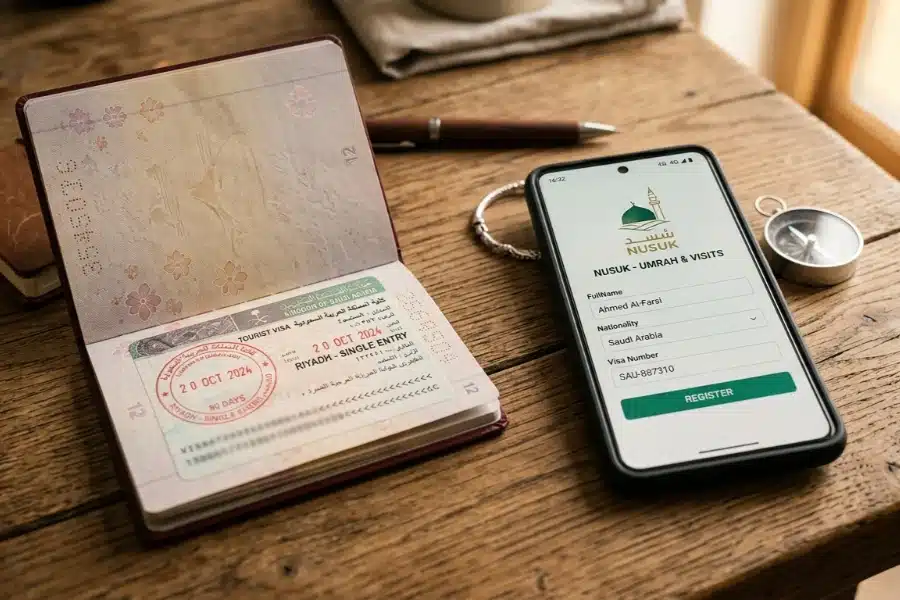
Saudi Arabia changed the rules a few years back — and most people still haven’t caught up. If you’ve been wondering whether you can perform Umrah on a tourist visa, the short answer is yes. But the full picture is more nuanced than that, and getting the details wrong can cost you a once-in-a-lifetime trip. So let’s get into it.
Before 2019, the only way to perform Umrah was through an official Saudi Arabia pilgrimage visa — a dedicated document issued through licensed travel agents. That was it. No exceptions, no workarounds.
Then Saudi Arabia launched its tourism e-visa programme as part of Vision 2030, and everything changed. For the first time, Muslim travellers from eligible countries could visit Saudi Arabia and perform Umrah on the same trip. It meant you no longer needed to book through a government-authorised package to make your pilgrimage — and that flexibility opened doors for millions of Muslims worldwide.
That said, Umrah on tourist visa comes with its own rules, and it’s worth understanding them before you book your flights.
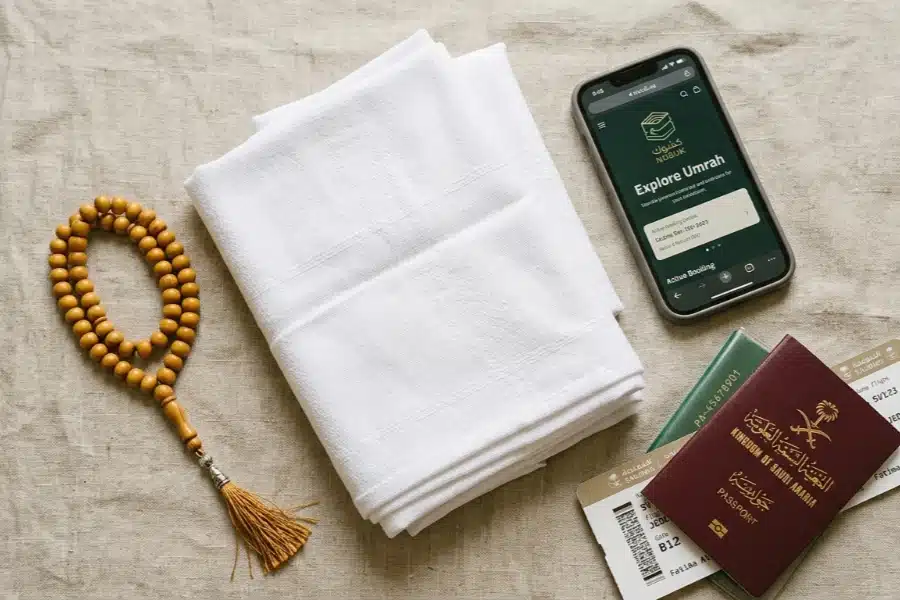
This is probably the most searched question on the topic right now — and the answer has genuinely shifted. So, what visa is needed for Umrah? As of 2026, Muslims from eligible countries no longer need a dedicated Umrah visa. A standard Saudi e-tourist visa is enough.
According to Saudi Arabia’s Ministry of Hajj and Umrah, Muslims holding a valid Saudi e-tourist visa are permitted to perform Umrah. This applies to citizens of 49+ countries eligible for the Saudi Arabia e-visa, covering most of Europe, North America, Southeast Asia, and beyond. The Umrah visa requirements 2026 are straightforward for eligible nationalities — apply online, get approved, register on Nusuk, and go.
But there’s a condition that trips people up: you still need to register through the Nusuk platform before entering Masjid al-Haram. Saudi authorities use Nusuk to manage pilgrim flow, allocate time slots, and keep the sacred sites from being overwhelmed. Skipping this step isn’t just inconvenient — you can get turned away at the gates.
Here’s the part that surprises most people: Nusuk registration is free. You don’t need a travel agent for it. Create an account, pick your preferred date and time for Umrah, get your permit. Straightforward — once you know it exists.
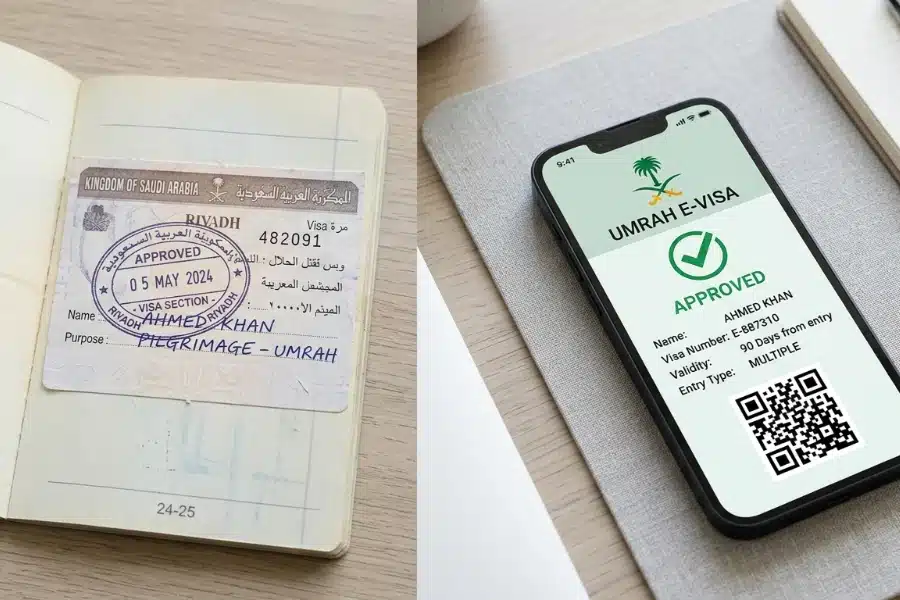
This is where most people get confused, so it’s worth spelling out.
The Umrah visa was issued for the sole purpose of performing Umrah. It came through licensed operators, with a fixed validity window tied to a pre-arranged package. Sightseeing wasn’t really part of the deal.
The Saudi tourist visa is a multi-entry, one-year visa allowing stays of up to 90 days per visit. You can travel freely — AlUla, the Red Sea, Riyadh — and if you’re Muslim, you can perform Umrah on tourist visa during that same trip. No package required. Effectively, the tourist visa to Saudi Arabia includes Umrah permission for Muslims, which is what makes it such a game-changer.
The Saudi Arabia tourist visa rules are also pretty flexible for planning. You pick your own dates, you’re not locked into an operator’s itinerary, and you can extend the trip well beyond the pilgrimage itself. At Ihram Travel, we’ve watched a growing number of clients combine Umrah with a broader Saudi experience — and honestly, it’s a great way to travel.
Two questions we get constantly, so let’s address both directly.
Can I do Umrah on a Saudi tourist visa? Yes, absolutely — provided you’re Muslim and from an eligible country. The tourist visa route is now a fully legitimate, government-approved pathway for pilgrimage.
Can I perform Umrah on a visit visa? This one’s slightly different. Saudi Arabia issues different categories of visit visas — some for business, some for family visits, some as the standard tourist e-visa. If you’re asking about Umrah on visit visa specifically as a family or business visit category, the permissions can vary. The safest and cleanest route for pilgrimage remains the standard tourist e-visa, which explicitly covers religious visits for Muslims. When in doubt, confirm with the Saudi embassy or speak to a registered agency like Ihram Travel before you travel.
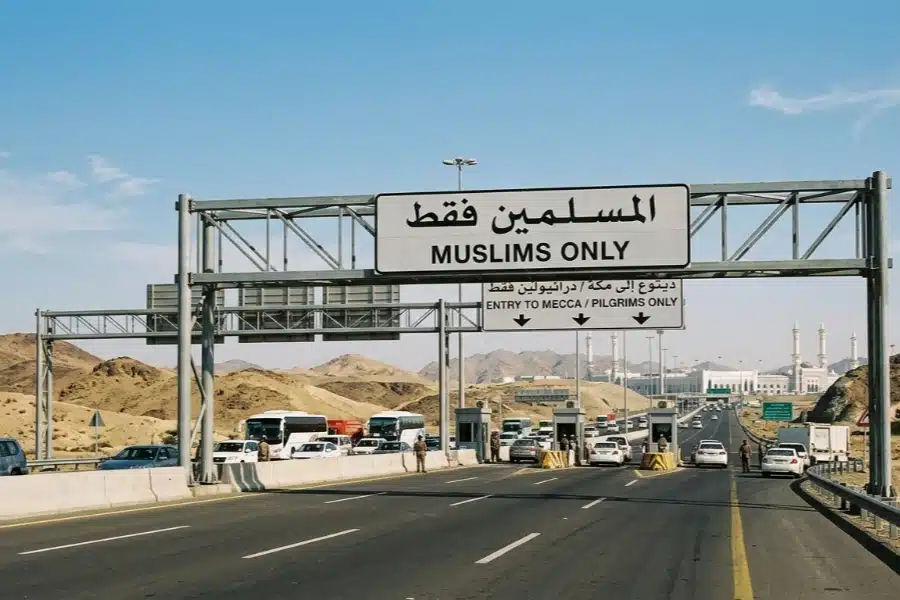
No — and this has nothing to do with visa type. Non-Muslims aren’t permitted to enter Mecca or Madinah, full stop. Checkpoints on roads into both cities enforce this. Non-Muslims are welcome across the rest of Saudi Arabia on a tourist visa, but Makkah entry remains exclusive to Muslims regardless of what document you’re travelling on.
So if a non-Muslim friend asks can I visit Makkah on tourist visa — the answer is no. Not on any visa.
If you’re a Muslim planning to visit Saudi Arabia and perform Umrah on the same trip, here’s how it works in practice:
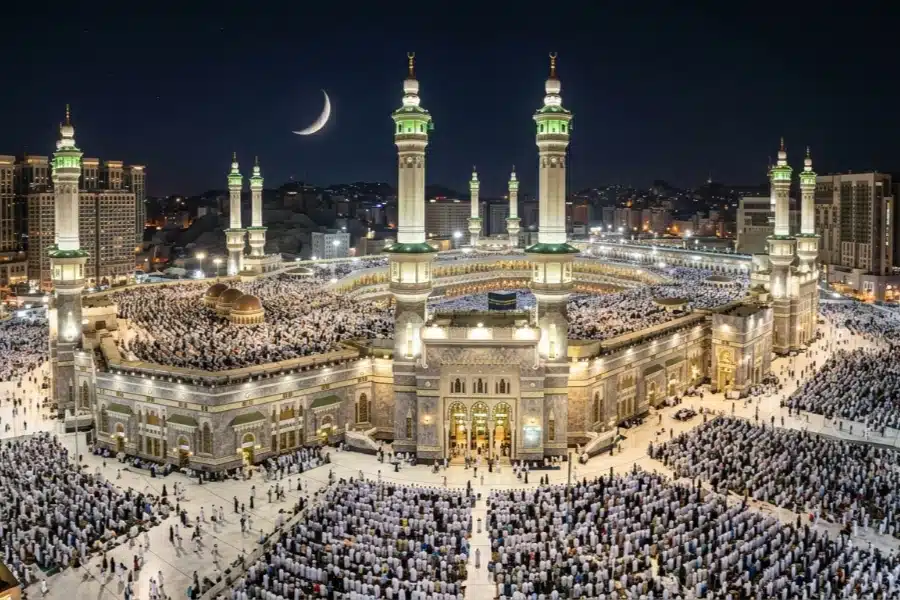
This question comes up constantly. Umrah during Ramadan on tourist visa is permitted. Saudi authorities increase Nusuk slot availability during Ramadan to handle the surge — but those slots still fill up fast, sometimes weeks out.
If Ramadan is your target window, book everything early. Visa, flights, accommodation, Nusuk registration. Don’t assume you’ll sort it closer to the time, because by then the good slots are usually gone and the hotels near the Haram are charging peak rates.
For the standard Saudi e-tourist visa, yes. For other visit visa categories, confirm the permissions before travelling.
Not automatically. Citizens of some countries may still need a traditional Umrah visa through authorised operators. Check the Umrah visa requirements 2026 and the current eligibility list before assuming this route applies to you.
Yes, if you’re Muslim and have a valid Nusuk permit. The permit is required regardless of visa type.
Technically no — Nusuk registration is self-service and free. But logistics, accommodation near the Haram, and handling anything that goes wrong on the ground are genuinely easier with experienced support. That’s what we do at Ihram Travel.
After working with hundreds of pilgrims who’ve gone the tourist visa route, one thing stands out: people consistently underestimate how fast Nusuk slots disappear. First-timers especially tend to assume they’ll register once they land. That’s a gamble, and during peak season it usually doesn’t pay off. If you’d rather not deal with the logistics yourself, structured hajj packages can handle Nusuk registration, accommodation, and scheduling — so nothing slips through the cracks.
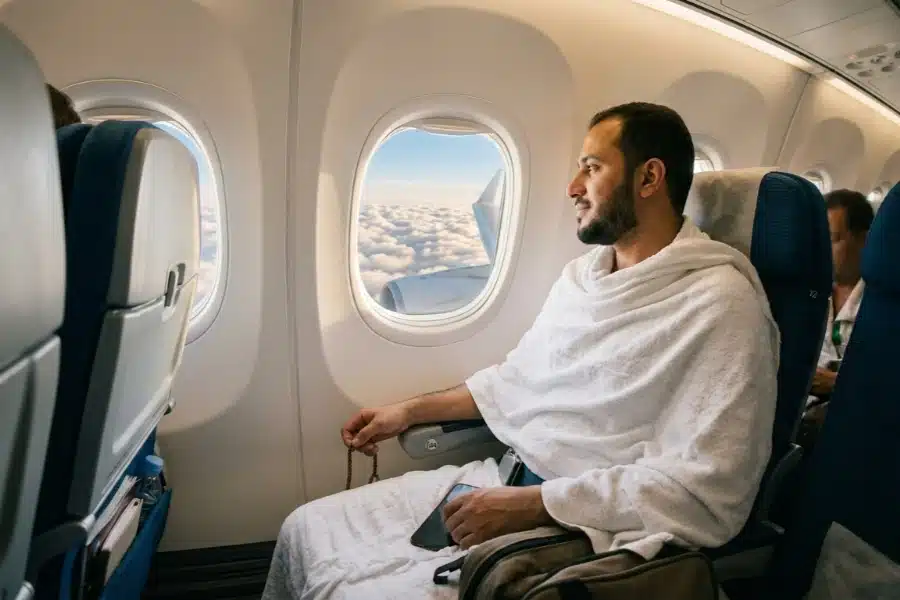
The other thing — the Ihram checkpoint mid-flight. Many travellers flying directly to Jeddah don’t realise they cross the Miqat boundary while still in the air. Airlines make an announcement, but if you’re asleep or distracted, you’ll miss it. Check your flight path in advance and have your Ihram ready before boarding. It’s a small thing that makes a real difference.
Umrah on tourist visa isn’t a shortcut or a workaround. It’s an officially sanctioned route that Saudi Arabia introduced to make pilgrimage more accessible — and for eligible Muslims, it’s a legitimate, flexible, and often more affordable way to answer the call.
“Flexible” doesn’t mean “wing it on arrival,” though. Nusuk registration, accommodation near the Haram, Ihram preparation, and understanding Saudi Arabia tourist visa rules all need advance planning. The difference between a smooth Umrah experience and a stressful one usually comes down to that.
At Ihram Travel, we help pilgrims handle every part of performing Umrah on tourist visa — from visa applications and Nusuk registration to itineraries that pair the spiritual journey with the best of what Saudi Arabia has to offer. First-timer or returning pilgrim, we’re here to make it work.
Our curated content will ensure you’re well–prepared and inspired every step of the way.