
Umrah Visa vs. Tourist e-Visa: What’s the Difference?
September 26, 2025 No Comments
Every year, millions of Muslims travel to Saudi Arabia with the intention of performing Umrah,…

Home / Riyals, Cards, or Apps? The Smart Pilgrim’s Guide to Managing Money & Fees
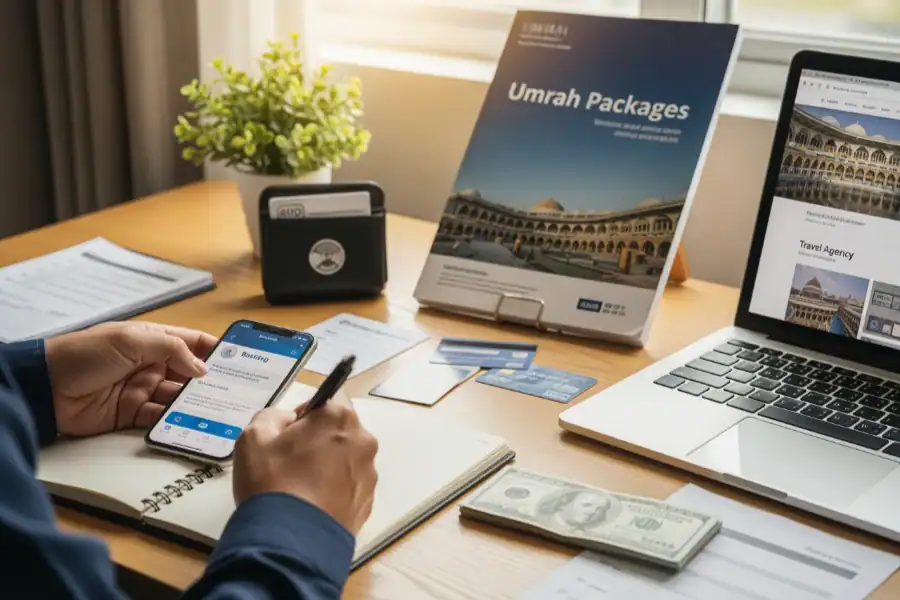
Traveling for Umrah requires more than a visa and a list of rites; it needs a money plan. If you’re booking Umrah Packages through a reputable Umrah Travel Agency you’ll want to think beyond plane tickets: currency, cards, apps, local fees, tipping, and unexpected expenses all matter. Here’s a practical, experience-backed guide to avoid fees, stay secure, and focus on the pilgrimage itself.
Cash (Saudi Riyals) still rules for small purchases — the one-coin tea stalls, local taxis, and street vendors appreciate it. That said, carrying large sums increases risk. Using cards reduces theft risk but can trigger foreign transaction fees and ATM charges. Mobile payment apps are growing fast in Saudi cities, and some vendors accept international wallets, though acceptance isn’t universal. One of the practical Umrah Budgeting Tips is to use a balanced mix of cash, cards, and apps to stay secure while managing expenses efficiently.
Use a mix: pocket Riyals for small purchases, a debit card for ATM withdrawals, and a credit card for larger hotel or tour payments booked via your Umrah Travel Agency.
Notify your bank before travel and ask about ATM partner banks in Saudi Arabia to reduce withdrawal fees.
Keep emergency cash in a hidden place — enough for 2–3 days.

Look for cards with no foreign transaction fees and good fraud protection. Some banks offer travel cards that preload Saudi Riyals, locking in exchange rates and avoiding repeated conversion fees. When booking premium options like 4 Star Umrah Packages you’ll likely want a credit card that offers travel protection.
No foreign transaction fees.
Chip-and-PIN compatibility.
Card network widely accepted (Visa or Mastercard).
Contactless payments for faster transactions.
Apps can be cloned, locked, or deactivated remotely — a lifesaver if a device is stolen. Popular global wallets allow you to pay at many merchants, and banking apps let you transfer funds between accounts fast. That being said, apps rely on internet access, which can be spotty in crowded areas like the Haram during peak times.
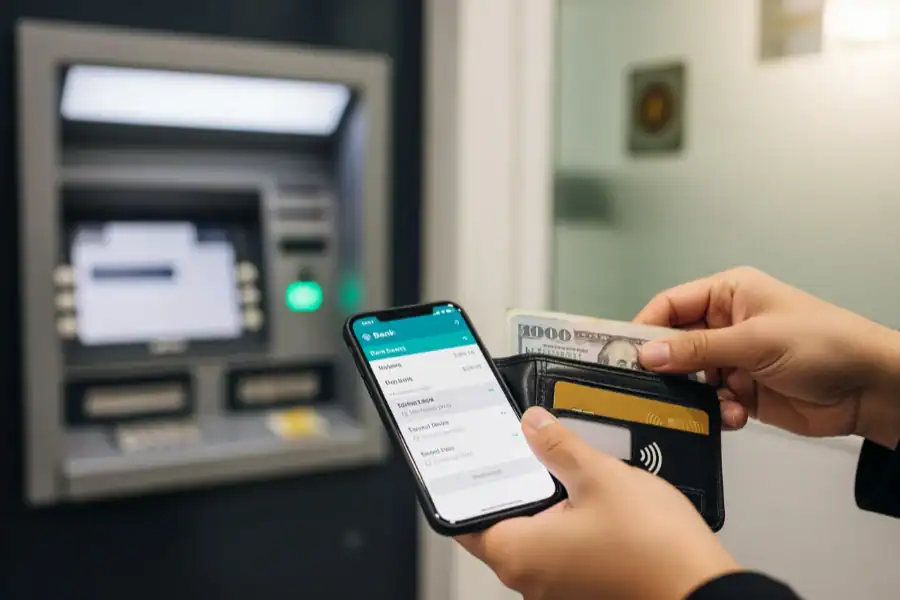
Banks, ATMs, card networks, and currency exchangers each take a bite. Common fees include ATM withdrawal fees, foreign transaction fees (usually 1–3% per purchase), dynamic currency conversion (DCC) where merchants charge in your home currency at a poor rate, and card-not-present fees for online bookings. A key part of smart Umrah Budgeting Tips is being aware of these charges. If you’re booking Ramadan Umrah Packages, be extra mindful: peak-season demand can amplify service surcharges and refundable-deposit terms.
Following these strategies is a key part of effective Umrah Budgeting Tips to minimize fees and manage your money efficiently during the pilgrimage.
Traveling with family or a group booked under Umrah Packages? Decide upfront who pays what. Use apps for quick IOUs, but reconcile final expenses with a single payer to avoid multiple fees. If your group booked premium accommodations like 4 Star Umrah Packages, pre-pay as many services as possible (taxis, guided tours, hotel extras) to lock rates and avoid on-the-ground price hikes.
Lead pilgrim books the hotel and transport through the Umrah Travel Agency and pays with a fee-friendly card.
Others reimburse via bank transfer or an app; the lead uses local Riyals for incidentals.
Keep digital receipts and screenshots — they’re lifesavers if dispute arises.
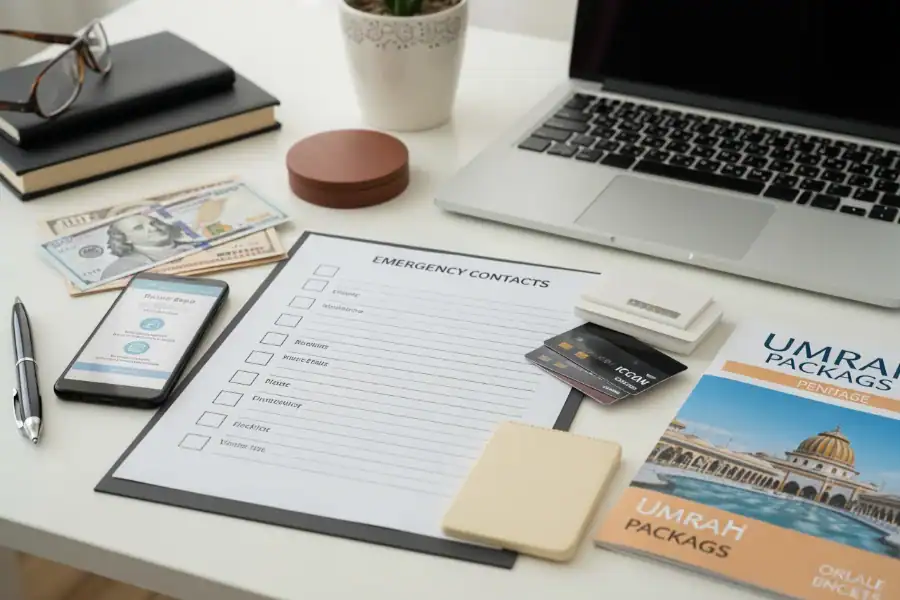
The Haram is generally safe, but pickpocketing and card fraud can happen anywhere. One of the smart Umrah Budgeting Tips is to protect your money tools: use RFID wallets, enable card alerts, and set small daily withdrawal limits on your banking app. If you lose a card, make sure you have your bank’s international emergency number saved in multiple places.
Memorize the last four digits of your cards and note the issuer’s emergency hotline.
Use ATMs inside banks, not street kiosks.
Avoid public Wi-Fi for banking; use a mobile hotspot or offline authorization when possible.
Booking Ramadan Umrah Packages brings unique challenges: higher tourist numbers, earlier hotel check-ins tied to prayer times, and sometimes additional service fees during peak nights. Exchange kiosks might close earlier during Ramadan evenings, so plan currency exchanges accordingly. Also, tipping customs may shift — budget extra for porters and local helpers.

When comparing offers from different Umrah Travel Agency providers, read the fine print carefully. Refundable deposits, administrative fees, and cancellation penalties can vary dramatically between standard Umrah Packages and higher-end 4 Star Umrah Packages. One of the essential Umrah Budgeting Tips is to look beyond the advertised price — if a deal sounds too good to be true, it’s probably saddled with hidden or sneaky fees.
Non-refundable deposits for basic services.
High cancellation fees within 30 days.
Mandatory insurance add-ons not explained upfront.
Multi-currency travel cards for locking in rates.
A fee-free debit card for ATM withdrawals partnered with Saudi banks.
A small, dedicated travel wallet app for receipts and shared expenses.
A laminated list of emergency contacts and bank numbers.
From my personal experience as a Certified Financial Planner who has planned and traveled on multiple pilgrimages over the past seven years, a blended approach wins every time. I’ve used cash, cards, and apps across several group trips and individual Umrah journeys, and the pattern is consistent: diversify, prepare, and prioritize low-fee channels — one of the core principles of effective Umrah Budgeting Tips. For instance, once during Ramadan I avoided a costly DCC fee simply by insisting on paying in Riyals — a small decision that saved the group nearly 4% on a large hotel bill for our Umrah Packages booking.
Notify your bank and set travel dates.
Buy a small amount of Riyals before travel.
Download bank and wallet apps and enable two-factor authentication.
Pre-pay hotels or services when booking Umrah Packages if fees are transparent.
List emergency numbers and the contact at your Umrah Travel Agency.
Pack a backup payment method stored separately.
Managing money on an Umrah trip doesn’t have to be stressful. With a mix of cash, purpose-chosen cards, and vetted apps, you’ll minimize fees and maximize peace of mind. Remember: small choices (say no to DCC, use partner ATMs, pre-pay where it makes sense) compound into big savings. Whether you opt for budget-friendly Umrah Packages or splurge on 4 Star Umrah Packages, a clear money plan helps you focus on what truly matters — the pilgrimage.
Our curated content will ensure you’re well–prepared and inspired every step of the way.