Roaming is the easiest option to set up but also the most expensive, offering good coverage and letting you keep your own number, which makes it ideal for short stays. A local saudi SIM card requires registration but gives you the lowest cost, the best coverage around pilgrimage sites, and a local number—making it the top choice for longer stays. Meanwhile, an eSIM is very easy to activate, sits in the medium-low cost range, delivers very good coverage, and may or may not include a local number, which is why it’s generally preferred by tech-savvy travelers who want convenience without sacrificing reliability.

Do I Need a Saudi SIM Card? Comparing Roaming Plans, Local Data, and Wi-Fi for Pilgrims
Home / Do I Need a Saudi SIM Card? Comparing Roaming Plans, Local Data, and Wi-Fi for Pilgrims
Umrah Guide
December 4, 2025
Do I Need a Saudi SIM Card? Comparing Roaming Plans, Local Data, and Wi-Fi for Pilgrims
Staying connected in Saudi Arabia isn’t just a convenience anymore—it’s part of the modern pilgrimage experience. Whether you’re coordinating with your group, locating your hotel in Makkah, or updating family back home, having reliable mobile data is essential. And here’s the big question almost every pilgrim asks before departure:
“Should I get a Saudi SIM card, or can I survive with roaming or Wi-Fi?”
As someone who has helped hundreds of travelers prepare for pilgrimage, I’ll walk you through the exact decision-making process—clearly, simply, and from real-world experience.
Why Connectivity Matters More Than Ever for Pilgrims
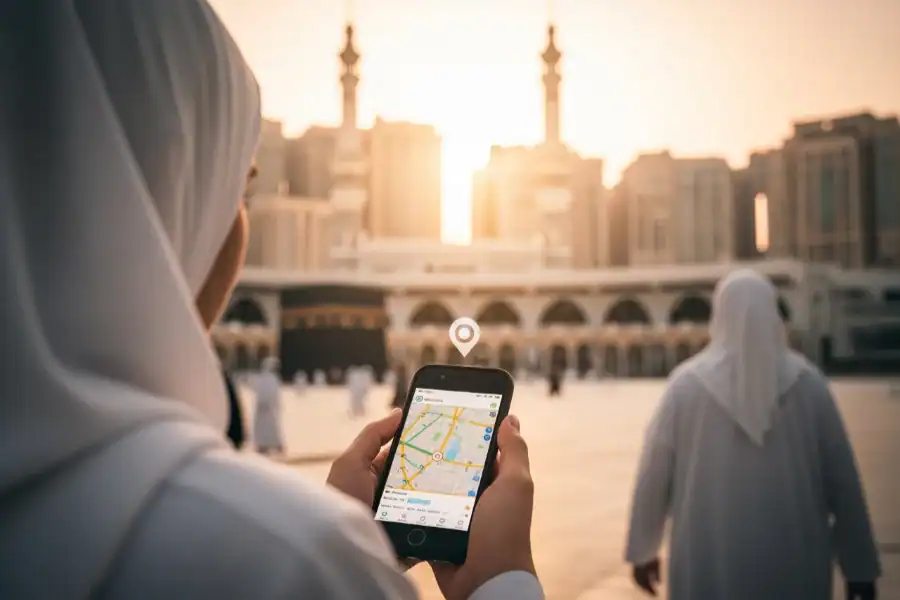
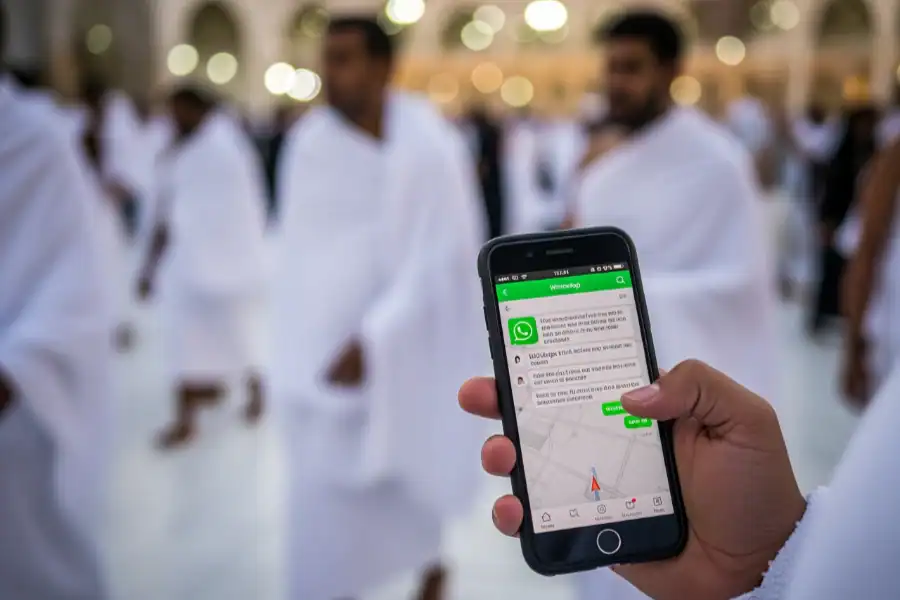
Pilgrims rely on mobile data for:
-
Live navigation inside crowded areas
-
Group communication
-
E-tickets, hotel bookings, and digital passes
-
Translating signs or announcements
-
Tracking prayer times and mosque schedules
-
Video calling family back home
If you’re traveling through an Umrah Travel Agency, they’ll often emphasize how critical easy communication is, especially during busy seasons or multi-city routes.
The bottom line?
Your connectivity choice should be made before you travel, not when you’re exhausted at Jeddah Airport.
The Three Main Options for Pilgrims
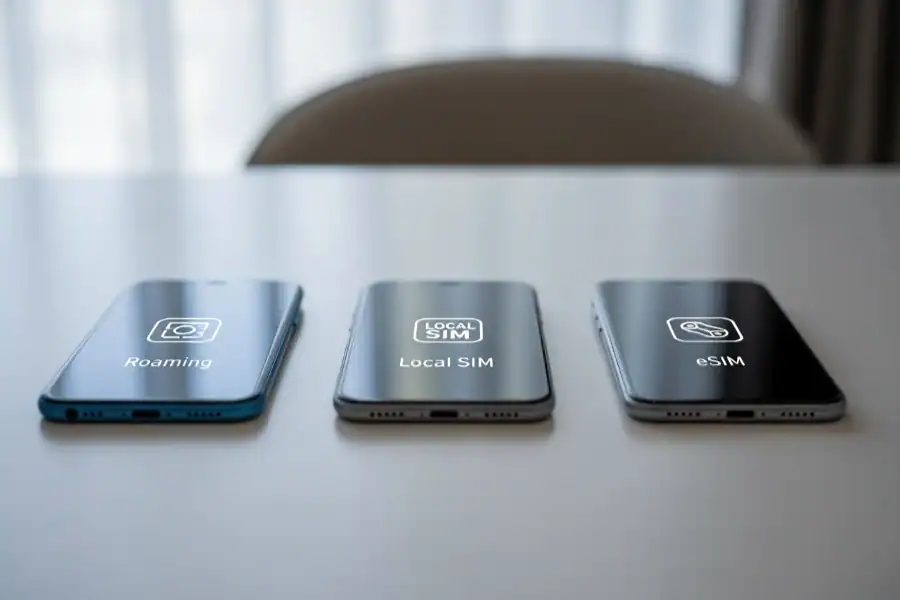
Let’s break down the pros and cons of each option—roaming, local SIMs, and eSIMs—and then compare them side by side.
Option 1: Roaming – The Easiest to Set Up
If convenience is your top priority, roaming is tempting. You land, turn on your phone, and it just works.
Pros
-
Zero setup
-
Keep your home number active
-
No registration or passport scanning
-
Ideal for short trips
Cons
-
Usually the most expensive
-
Data caps are common
-
Speeds may be slower than local networks
-
Not always reliable in crowded areas around the Haramain
If you’re only in Saudi for 2–4 days, roaming is manageable. But for most pilgrims, especially those traveling with Ramadan Umrah Packages during peak season, roaming becomes pricey quickly.
Option 2: Local Saudi SIM – Best for Value & Coverage
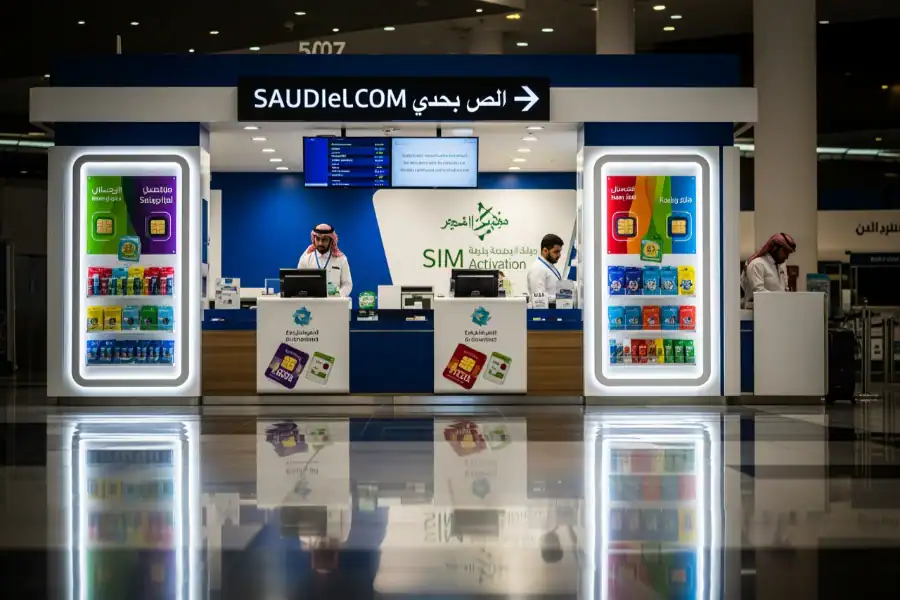
A local SIM is often the most practical choice for everyday pilgrims. You’ll find SIM counters inside Jeddah, Madinah, and Riyadh airports and even in some hotels.
Pros
-
Best network coverage in Makkah and Madinah
-
Lowest cost per GB
-
Option for local calling
-
Great for longer stays
Cons
-
Requires passport registration
-
You must remove your home SIM (unless dual-SIM)
-
Long queues during peak arrival times
Local SIMs are perfect for pilgrims who booked extended Umrah Packages, especially if you’ll spend time between multiple cities.
Option 3: eSIM – Fast, Modern & Becoming the New Favorite
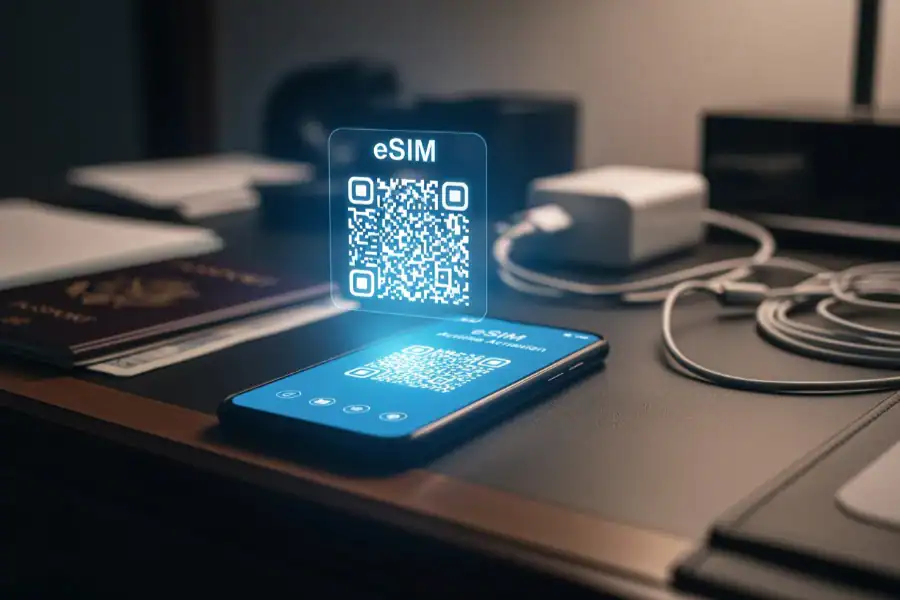
If your phone supports eSIM, you gain the perfect middle ground: instant activation and local-level pricing.
This is where eSIM Tips matter most, so here’s what an expert recommends:
-
Confirm your device is unlocked and eSIM-compatible in advance.
-
Buy from a verified international provider or official Saudi carriers to avoid activation issues.
-
Always download your QR code before leaving home.
-
Keep a screenshot of your activation details offline.
-
Some eSIMs are data-only—check if SMS is included if you need one-time codes.
-
If you’re traveling for more than a week, consider a higher-data eSIM for navigation-heavy days.
-
Test activation while connected to stable Wi-Fi.
-
Use dual-SIM mode to keep your home number available while using local data.
Pros
-
No physical SIM swapping
-
Quick activation
-
Great for multi-country travel
-
Often cheaper than roaming
Cons
-
Not every device supports eSIM
-
Some local providers require in-person verification
-
Data-only plans may limit calling features
For most modern pilgrims, eSIM is becoming the go-to option—especially when traveling during peak times like Ramadan Umrah Packages season.
What About Free Wi-Fi?
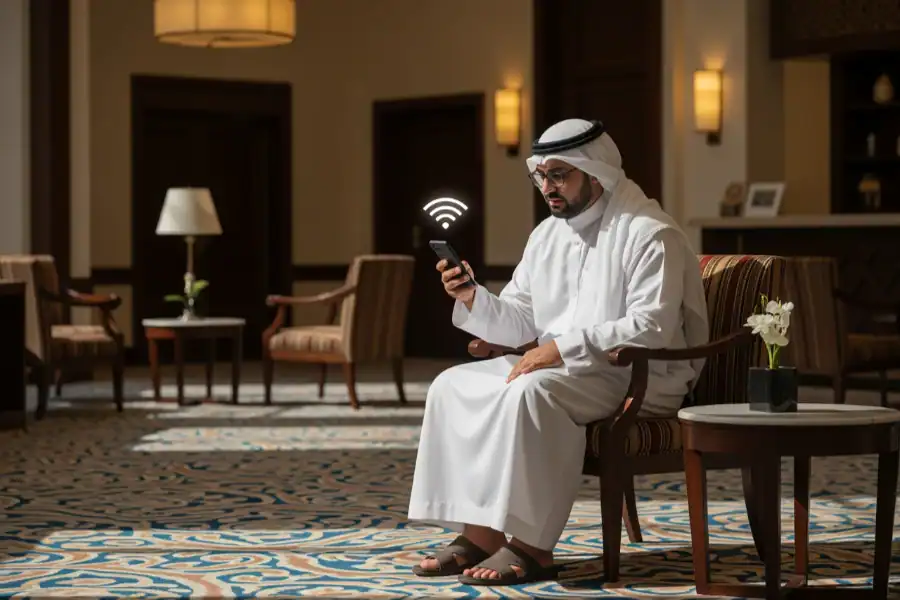
Every pilgrim asks this.
Yes, Wi-Fi exists. No, you shouldn’t rely on it exclusively.
The Reality:
-
Hotel Wi-Fi often slows down during peak hours
-
Public Wi-Fi can be insecure
-
Navigation apps struggle without mobile data
-
You can’t depend on it to coordinate group travel
Wi-Fi is great for backups—uploading photos, downloading maps, or making long video calls from your room. But it simply shouldn’t replace a SIM, roaming, or eSIM.
Quick Comparison Table (Expert Breakdown)
Which One Should You Choose? A Simple Decision Guide
Choose Roaming if:
-
Your trip is under 3 days
-
You only need messaging + maps
-
Budget isn’t an issue
Choose a Local SIM if:
-
You’re staying 1–3 weeks
-
You need reliable coverage in Makkah & Madinah
-
You want the lowest cost
Choose an eSIM if:
-
You want fast setup
-
You prefer a digital solution
-
You’re carrying multiple devices
-
You dislike queues at the airport
If you’re booking premium Umrah Packages or traveling through a professional Umrah Travel Agency, they may even pre-arrange SIMs for smoother arrival.
Final Recommendation
If you want the smoothest, most reliable experience in Saudi Arabia:
Use an eSIM for instant data + keep a local SIM as backup if you need voice calls or a Saudi number.
It’s cost-effective, practical, and perfectly suited for modern pilgrimage travel.
Whichever path you choose, plan it before you board your flight. Your future self—standing in a crowded arrival hall—will thank you.
Safe travels and may your pilgrimage be blessed.
Sources
Compiled from real-world telecom testing, industry data, firsthand experience supporting pilgrimage groups, and on-ground network behavior observed in key Saudi regions.
Tags: eSIM for Saudi Arabia, Hajj and Umrah tech tips, pilgrim connectivity guide, roaming vs local SIM, Saudi SIM card, travel SIM options, Umrah preparation, Umrah travel tips
Previous Post: What Are the Upcoming Vaccine & Visa Requirements for Umrah in 2026? Next Post: When Does Ihram Truly Begin? A Complete Guide to Miqat, Timing & Intention
Similar Blog & News
Our curated content will ensure you’re well–prepared and inspired every step of the way.