Why Umrah Visas Get Rejected and How to Avoid Application Problems
July 27, 2026 No Comments
Preparing for Umrah is deeply meaningful, but the visa process can become stressful when one…

Home / Discovering Hidden Gems in Saudi Arabia
Most people who fly to Saudi Arabia come for Makkah and Madinah. That’s the plan. That’s the whole trip. And honestly? There’s nothing wrong with that. But Saudi Arabia is enormous — the fifth-largest country in Asia — and what lies beyond the two holy cities is genuinely surprising. If you’re already making the journey, it’d be a shame to leave without seeing a little more.
This is your Saudi Arabia travel guide for the parts most people skip.
Umrah trips often include layover days, rest days, or flexible itineraries that leave room for extra stops. That’s exactly where hidden gems in Saudi Arabia for Umrah travelers come in. You’ve already paid for the flight. You’re already there. A two-hour drive from Makkah or Madinah can take you somewhere you never expected to find in the Arabian Peninsula.
Saudi Arabia tourist attractions in 2026 are more accessible than they’ve ever been. The country opened for international tourism in 2019 and hasn’t looked back. New roads, visa-on-arrival for dozens of nationalities, and a government genuinely invested in tourism through Vision 2030 have pushed travel infrastructure forward fast. There’s never been a better time to go beyond the obvious.
At Ihram Travel, we see it constantly — pilgrims who extend their stay by three days and come back with stories that have nothing to do with Umrah itself. Not because the spiritual journey wasn’t enough. Because Saudi Arabia surprised them.
Riyadh gets dismissed as a transit city. That’s a mistake.
The Al Masmak Fortress is one of the more fascinating stops in the capital. This 150-year-old mud-brick fort is where King Abdulaziz Al Saud launched his campaign to unify the scattered kingdoms of the Arabian Peninsula into modern Saudi Arabia. One man, a small group of fighters, and a gate with a spear still lodged in it. Use the Al Masmak Fortress visit guide at the entrance — it’s actually good. The fort is compact, walkable in 40 minutes, and the museum inside uses old photographs, maps, and audio narrations well. It doesn’t feel like a dusty archive.
Right next door, Souk Al Zal is the oldest market in Riyadh. If you’re wondering what things to do in Saudi Arabia besides Umrah that give you a real feel for local life, this is it. Carpets, traditional clothing, old silver jewelry, the kind of chaotic charm a modern mall can’t replicate.
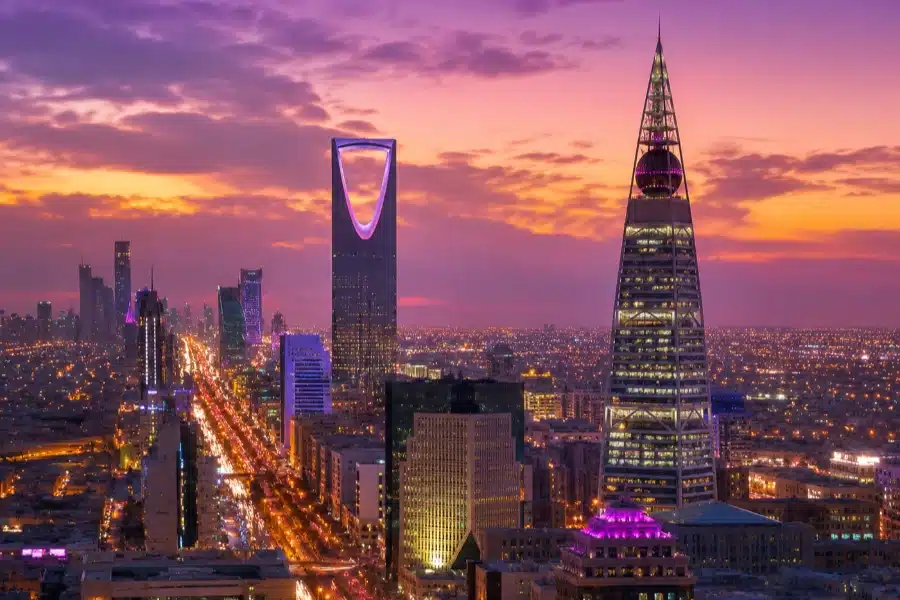
For something more dramatic, the Al Faisaliah Tower and Kingdom Tower Center both offer sky-high views of a city that has grown almost incomprehensibly fast. The Kingdom Tower’s sky bridge sits on the 99th floor. Worth the ride up.
If nobody has mentioned Abha to you yet, consider this your introduction.
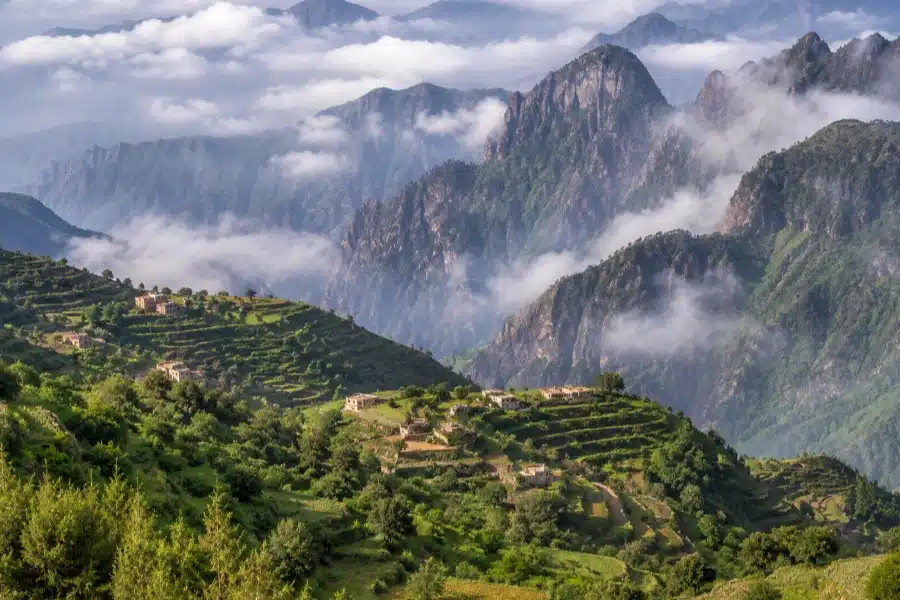
The Aseer region sits in Saudi Arabia’s southwest, elevated enough that temperatures regularly stay cool even in summer — which, in a country where July averages can exceed 45°C in the lowlands, is not a small thing. The Aseer National Park travel guide most people find online barely scratches the surface. The park covers over 6,400 square kilometers, running from the Red Sea coast up into the mountains, with hiking trails, wildlife, and a pace of life that feels completely different from Riyadh or Jeddah.
Aseer is one of those hidden gems in Saudi Arabia for Umrah travelers that flies completely under the radar, mostly because it’s not on the way to anywhere else. You have to decide to go there. Most people don’t. Which means, when you do, it still feels uncrowded in a way that’s increasingly rare.
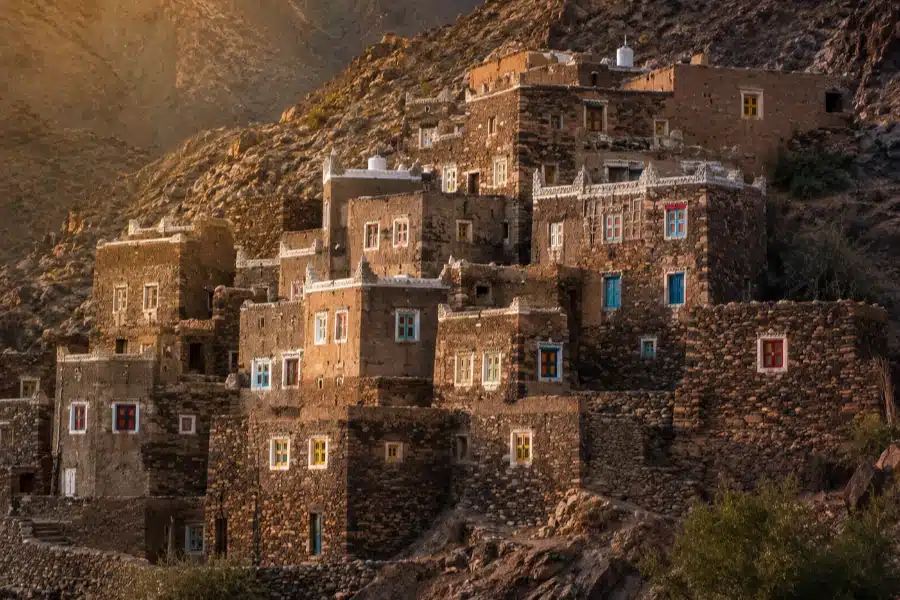
Rijal Almaa Heritage Village, about 45 kilometers from Abha, takes a minute to process. This 400-year-old village is still standing — buildings made from stone, clay, and wood, with brightly colored window shutters that pop against the mountain backdrop. It’s one of the best places to visit in Saudi Arabia for anyone curious about what the peninsula looked like before oil. The Rijal Almaa Heritage Village travel guide available at the site gives solid historical context, but honestly, the best part is just walking through it and realizing people actually lived here. Some still do.
AlUla deserves its own conversation.
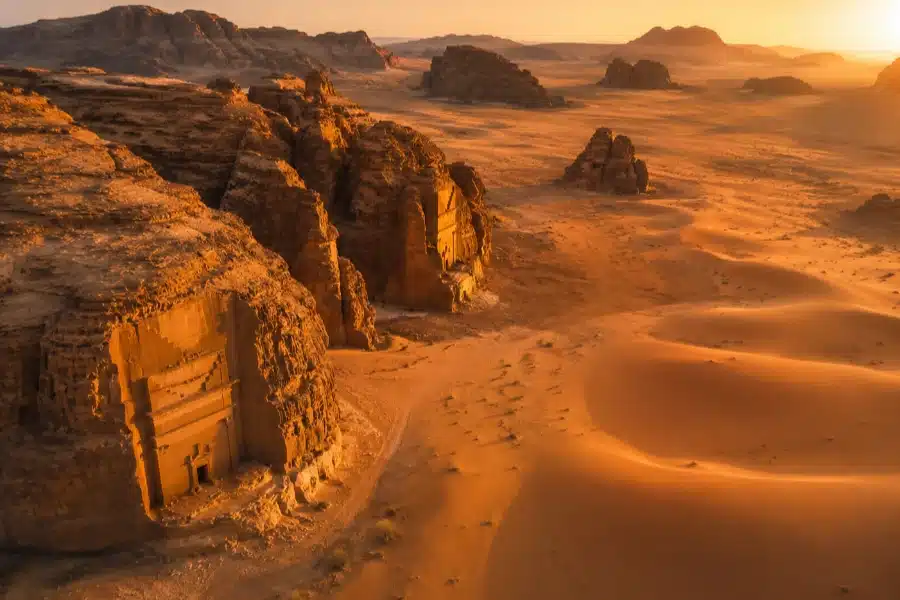
About 300 kilometers north of Madinah, AlUla is where the Nabataean civilization — the same people who built Petra in Jordan — carved tombs and temples directly into rose-colored sandstone cliffs. The site, called Hegra, is Saudi Arabia’s first UNESCO World Heritage Site. The scale of it is hard to describe properly. Massive carved facades, preserved after two thousand years in the desert dry. You can stand in front of a 2,000-year-old tomb with almost no one else around.
Flights from Riyadh and Jeddah now go directly to AlUla. Guided tours run daily. It still doesn’t have the crowds you’d expect at a comparable European site, which won’t last forever. For hidden gems in Saudi Arabia for Umrah travelers with a few extra days, the Madinah-to-AlUla route makes practical sense — a four-hour drive, or a short flight.
Saudi Arabia has over 2,000 kilometers of Red Sea coastline. Almost none of it is overrun with tourists, which is either a well-kept secret or simply a matter of people not looking.
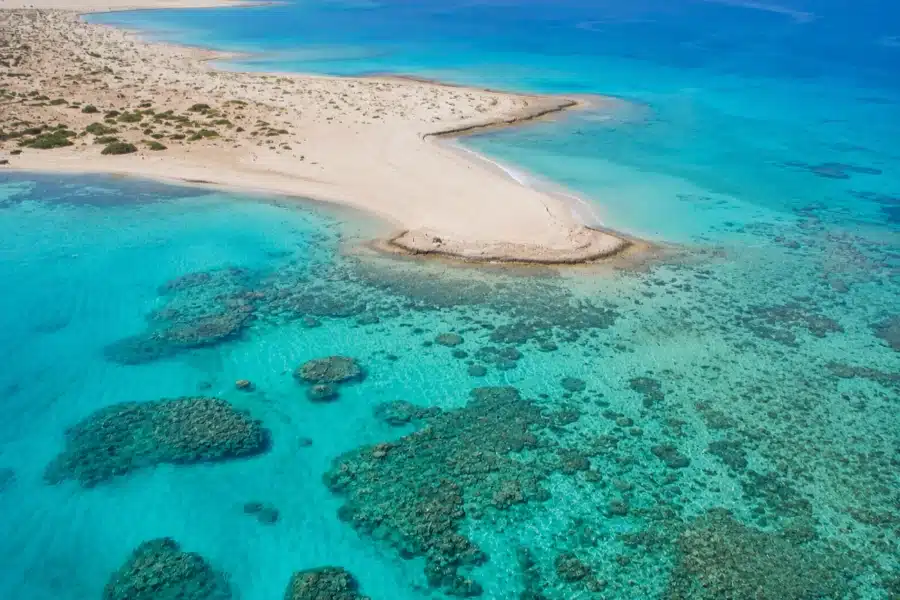
Umluj — sometimes called the Saudi Maldives — offers white sand, clear water, and reef snorkeling a few hours north of Jeddah. The coral reefs here are in better condition than at more heavily visited Red Sea spots. Among places to visit in Saudi Arabia beyond Makkah and Madinah, this one tends to surprise people most.
The Farasan Islands, further south near Jazan, are part of a protected marine reserve. Rare birds, gazelles, and fish-filled water, with regular ferries from Jazan. For anyone wanting to feel genuinely off the map, the Farasan Islands deliver better than most Saudi Arabia tourist attractions 2026 round-ups suggest.
After arranging dozens of extended Umrah itineraries at Ihram Travel, a pattern shows up consistently: travelers who add two or three extra days to explore somewhere like Aseer or AlUla come back with a different relationship to Saudi Arabia. They stop seeing it as a corridor and start seeing it as a destination.
One client — a retired teacher from Lahore — spent an afternoon at Rijal Almaa Heritage Village and said it reminded her of mountain villages in northern Pakistan she thought only existed back home. Another traveler, a young engineer on his first Umrah, stood at the Edge of the World escarpment near Riyadh and described it as the most unexpectedly moving moment of his whole trip. Not a spiritual site. Just a cliff. Just an enormous horizon.
These aren’t exotic adventures requiring special equipment or big budgets. They’re reachable, affordable, and sitting there for the people who think to look.
Your Umrah visa generally allows travel within the Kingdom — check your specific visa terms, but most modern e-visas cover movement across regions. October through March is the right window for inland destinations like Aseer and AlUla, when temperatures are genuinely pleasant. Coastal spots like Umluj work year-round but are more comfortable in cooler months.
Public transport between cities is limited, so renting a car or arranging private transfers makes the most sense for day trips. Ihram Travel can build combined Umrah-and-exploration packages from the start, so you’re not scrambling to organize side trips once you land.
The Kingdom gets reduced to two cities in most conversations. And yes, Makkah and Madinah are the heart of any Umrah trip. But the hidden gems in Saudi Arabia for Umrah travelers aren’t a bonus feature — they’re a real part of what the country is.
A 400-year-old village still standing in the mountains. A Nabataean tomb carved into pink sandstone. A national park that stays cool through an Arabian summer. Two thousand kilometers of coastline most of the world hasn’t noticed yet.
You’re already going. You might as well see it properly.
Ihram Travel specializes in Umrah packages that combine the spiritual journey with meaningful exploration of Saudi Arabia. Contact us to build an itinerary that fits your schedule and your curiosity.
Our curated content will ensure you’re well–prepared and inspired every step of the way.